Which products are worth making? Cost your batches before changing prices
Published By Jono Farrington · 8 min read
A recipe cost calculator helps you set a defensible price by adding ingredients, packaging, labour and overheads, then dividing by the units you expect to sell. Compare that cost with your selling price, allowing for payment fees and GST where relevant, before deciding whether to raise prices. Sometimes the better move is to make fewer varieties or promote a product that earns more for the time it takes.
Start with three products: your bestseller, your most time-consuming item and one you suspect is underpriced. You need current supplier prices, a realistic batch yield and a record of your working time. The result is an estimate of product profitability, not your final business take-home profit.
Build the ingredient cost from what you actually buy
Use invoice quantities and prices rather than the amount you remember paying last year. For each ingredient, calculate:
Cost used = pack price ÷ pack quantity × recipe quantity.
For example, a hypothetical 5 kg bag of flour costing A$12.50 has a cost of A$2.50 per kilogram. A recipe using 600 g uses A$1.50 of flour: A$12.50 ÷ 5,000 g × 600 g. Keep the purchase and recipe quantities in the same unit.
- Include small ingredients such as vanilla, baking powder and decorations.
- Allocate supplier delivery costs consistently, rather than forgetting them or charging the full delivery to several recipes.
- For fillings or components shared across recipes, cost the component first, then allocate the amount used.
- Use realistic usable quantities when trimming or preparation creates waste.
Then check the denominator. A tray that produces 24 pieces but normally leaves four broken, sampled or unsold has only 20 expected sales to recover its cost. Divide by those 20 units when testing whether the batch is viable.
Don't count the same loss twice. If you have already reduced the sellable yield for breakage, don't also add an allowance for that same breakage to the ingredient bill.
Pay for packaging, your time and a share of the kitchen
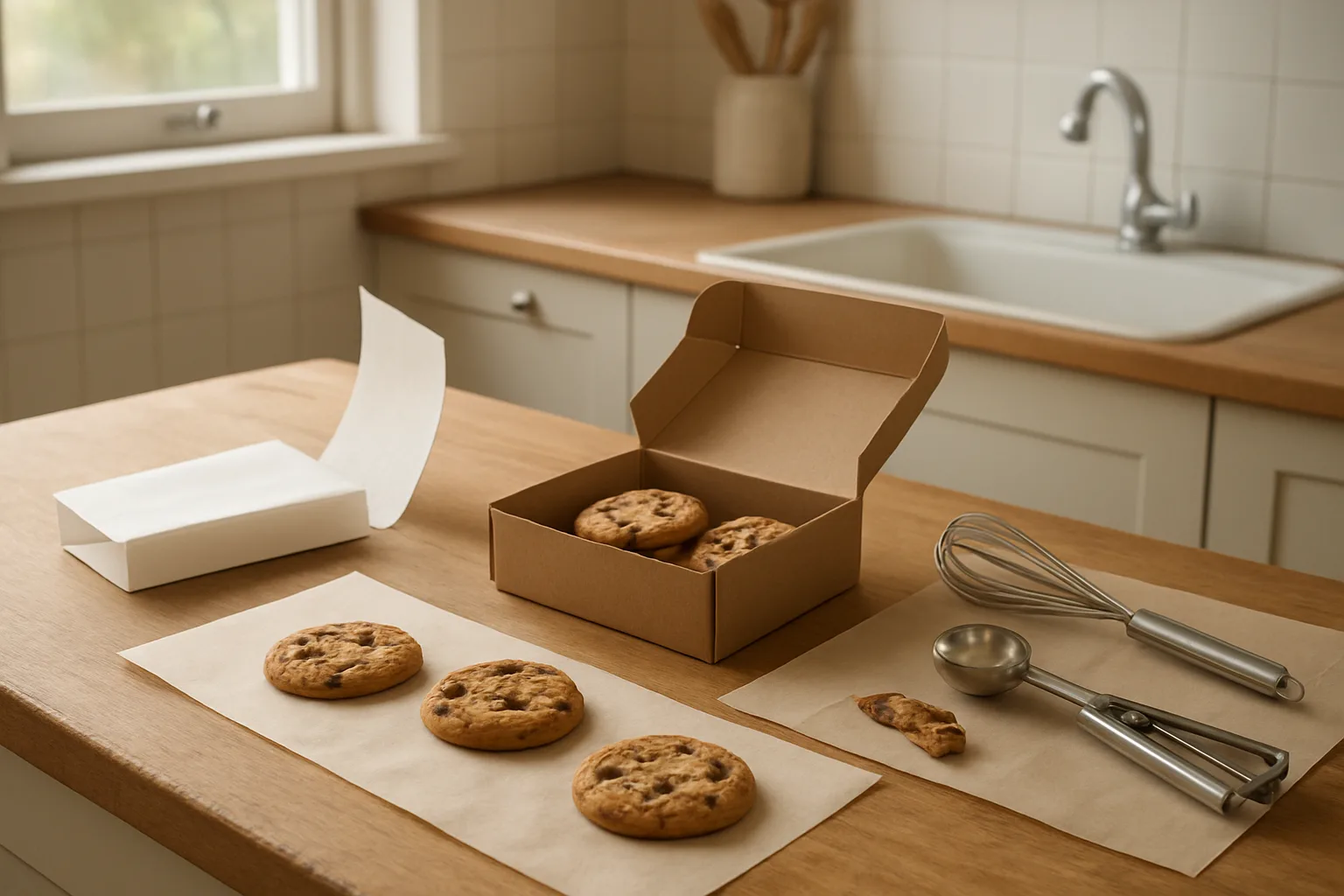
Packaging belongs to the thing you sell
List the box, bag, liner, label, ribbon and protective material actually used. There is no standard amount packaging should add: use its cost for that selling format.
A hypothetical A$1.20 box holding six cookies adds A$0.20 per cookie when sold as a complete box. An individually wrapped cookie needs its own calculation. Avoid charging for a box in both the recipe and the finished product.
Your labour is a cost even when you do the work
Choose an hourly rate for your pricing model and multiply it by active working time. Include preparation, decorating, packing and cleaning. This is a planning allowance for your work, not advice about wages or payroll obligations.
Separate unattended baking or setting time from hands-on work. If you pack another product while a cake bakes, don't charge the same working minutes to both batches. Record oven use separately where it creates an operating cost or limits capacity.
For makers, the same method applies to yarn, clay or wax and the time spent finishing each item. The guide to pricing crochet work explores that labour-heavy case.
Give small batches a realistic overhead allowance
Make a monthly list of business operating costs not already included elsewhere: software, insurance, equipment upkeep and a reasonable business-use allowance for shared expenses. For pricing purposes, allocate those costs using a consistent basis such as production hours. This isn't a calculation of tax deductions.
For example, A$160 of monthly overhead divided across 20 expected production hours gives A$8 per production hour. A one-hour batch receives A$8. These are hypothetical figures, not a recommended industry rate.
Use realistic output, not your best-ever Christmas week. Smaller batches may need a larger allowance per item because setup and cleaning still happen. Keep market stall fees, travel and delivery packing visible too: the same product can earn different amounts through different sales channels.
Turn a guessed price into a defensible one
Here is a hypothetical cookie batch for a seller who is not GST-registered. All amounts are AUD, using the amounts paid for inputs. Assume cash sales with no payment fee, 24 cookies made and 20 expected to sell. Only the 20 saleable cookies are packaged.
| Cost input | Calculation | Batch cost |
|---|---|---|
| Ingredients | Total recipe quantities | A$16.00 |
| Packaging | 20 × A$0.30 | A$6.00 |
| Labour | 1 hour × A$30 | A$30.00 |
| Allocated overhead | 1 hour × A$8 | A$8.00 |
| Total | A$60 ÷ 20 sellable cookies | A$3.00 per cookie |
At A$5 each, those cookies produce A$100 in sales and A$40 remaining after the listed costs. That remainder is not automatically net business profit: any omitted expenses still need to be paid.
Margin and markup give different answers
Margin = (selling price − cost) ÷ selling price. The A$5 cookie with A$3 of cost has a 40% margin before any costs excluded from this example.
Markup = (selling price − cost) ÷ cost. The same cookie has a 66.7% markup. Adding 40% to A$3 gives a price of A$4.20, but a margin of only 28.6%.
With no percentage-based fees or GST to account for, the target-margin formula is price = unit cost ÷ (1 − target margin). A$3 ÷ 0.60 gives A$5 for a 40% target. That target illustrates the arithmetic; it isn't a benchmark for Australian bakers.
Use cost-plus pricing to establish a starting point, a margin target to test the return, and market comparisons to check whether the offer makes sense. If a realistic customer price cannot cover your costs, revisit the product, batch size or selling format rather than hiding your labour.
Keep GST and selling costs visible
In Australia, GST is 10% on most goods and services, and businesses must register when GST turnover reaches A$75,000, according to the Australian Government's GST registration guidance. This is general information, not individual tax advice.
Before comparing products, establish your registration status and confirm which products are taxable. If your range mixes taxable and GST-free products, don't apply one assumption across the whole range. Ask your accountant to confirm product treatment and the appropriate treatment of purchase costs, including any GST credits.
Label your costing sheet clearly: customer price, GST where applicable, revenue after GST, costs and fees. Otherwise, two apparently similar margins may be based on different assumptions.
For card sales, include both any platform transaction fee and the payment provider's processing charge. Allocate fixed per-order costs across a realistic basket rather than assuming every item creates a separate transaction. Keep monthly subscriptions in overheads so they aren't counted twice.
Use your actual provider and plan settings. A pricing calculation with fees set to zero is a cash-sale scenario, not a safe default for every channel.
Compare products before lifting every price
A margin percentage alone doesn't tell you what to make next. Compare dollars remaining per sale, likely sales volume and the production time each item needs.
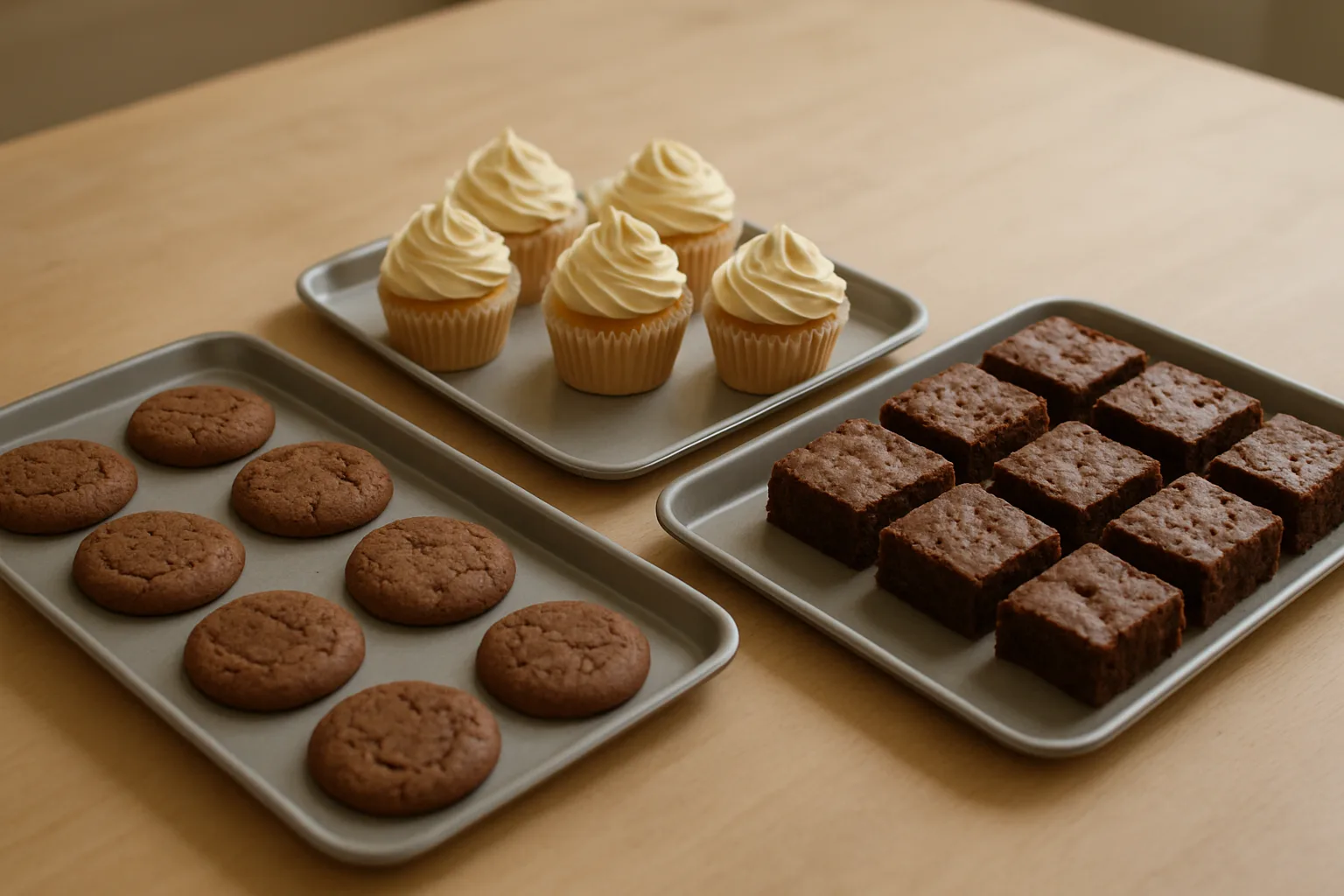
This hypothetical comparison uses the same non-GST-registered, fee-free assumptions as the cookie example. Costs include materials, packaging, labour and allocated overhead.
| Product | Price / cost | Remaining per sale | Margin |
|---|---|---|---|
| Cookie | A$5 / A$3 | A$2.00 | 40% |
| Decorated cupcake | A$8 / A$6.80 | A$1.20 | 15% |
| Brownie | A$4 / A$2.20 | A$1.80 | 45% |
The cupcake deserves attention first despite having the highest selling price. The brownie has the highest margin percentage, but the cookie leaves more dollars per sale. Demand and batch capacity decide which is more useful to promote.
Raise the price when the product still earns its place
Start with products that miss your target and have steady demand. Test a revised price against the full cost, then review paid sales over comparable selling periods. Don't assume unchanged demand.
Shrink the range when complexity costs too much
Consider pausing an item that needs unique ingredients, a separate production run or long finishing time for few sales. Before removing it, check whether shared overhead would simply move onto the remaining products. Dropping a line doesn't automatically remove every cost allocated to it.
Promote a better-margin item when capacity is available
Choose something customers want that also fits your production schedule. Check any bundle or discount at the actual selling price. If uncertain quantities are creating waste, taking pre-orders can give you an order count to plan around, rather than baking solely from a sales guess.
Put the costing into Vendl, then check paid sales
Vendl's Production tools let you connect recipe costing to products sold through your Vendl shop. You can move from a batch estimate to a product margin, then review recorded sales in Profit & loss.
- Add your materials. Record ingredients and packaging with their pack sizes and prices.
- Build the recipe. In Production → Recipes, enter the batch yield and quantities used, then add waste, labour minutes, your labour rate and overhead per batch.
- Link the product. Specify how many recipe units go into the product, such as six cookies in a box, and add packaging without duplicating costs.
- Test the price. Set the pricing calculator's target margin and fees to see a suggested price and profit at the current price. Use fee inputs that match the sale you're modelling.
- Record production. Recording a batch reduces material stock, increases finished-product stock and updates its cost.
- Review the result. Production → Profit & loss shows sales, GST, cost of goods and platform and card fees. Its product breakdown includes units, revenue, cost, profit and margin.
Only paid orders count in that report. If units have no cost, set a product cost or record a batch before trusting the comparison. The report's gross profit is not a substitute for checking expenses outside the recorded costs.
For Australian GST settings, Vendl calculates tax inside your entered prices when registration is enabled and lets you mark individual products tax-free. Confirm the correct tax treatment before applying those settings.
Review the same three products after your next comparable selling period. Update changed input prices, check actual yield and working time, then choose one action: reprice, simplify or promote. If a product is still only worthwhile when your labour is free, the price or the product needs another look.
To cost your batches and compare what your products earn, create a Vendl account and start with Production recipes.
Frequently asked questions
- Can I use the same recipe costing method for handmade products?
- Yes. Replace ingredients with materials such as yarn, wax or clay, and use the number of finished items as the batch yield. Include failed pieces, finishing time and packaging. For one-off work, treat the individual item as a batch of one.
- Should I price using a temporary supplier discount?
- Keep the amount actually paid in your purchase records, but also test the selling price against the expected next purchase price. A short-lived discount is a useful scenario, not necessarily a sustainable basis for your regular price.
- What if I don't know my overheads yet?
- Start with a clearly labelled estimate based on the costs you can identify. Keep a list of anything missing, then replace estimates with recorded amounts as bills arrive. A provisional calculation is useful as long as you don't mistake it for a complete profit figure.
- Should a wholesale order use the same price calculation?
- Build a separate scenario. Larger runs may change labour and packaging per unit, while delivery and order administration may add costs. Test the proposed wholesale price against that scenario rather than applying an arbitrary discount to your retail price.
Get new guides by email
Practical guides for stall, market and home-food sellers. No spam, unsubscribe any time.
Keep reading
How to start a soap business from home: checks before your first sale
Before you print packaging or book a market, check your soap-making setup, labels and true cost per bar. Then build a small range you can sell without double-counting stock.
When your handmade business needs a shop beyond Etsy
An owned shop isn't automatically cheaper than a marketplace. Compare what each channel earns after fees, marketing and your time, then test a second sales channel before leaving Etsy.
Set crochet prices that pay for your time, not just your yarn
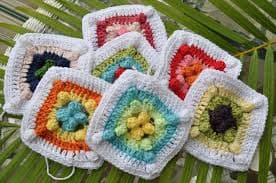
A fair crochet price covers more than yarn. Work out your sustainable price, allow for fees and GST, then check ready-made pieces, custom orders and bundles before you list them.