Set cupcake prices that cover every box, flavour and finishing touch
Published By Jono Farrington · 8 min read

To price cupcakes, start with the cost of one standard cupcake, including ingredients, labour, overhead and its liner. Then add the packaging and work needed for the actual order, allow for selling fees, and calculate a price that leaves your chosen profit margin. A six-pack should be costed as a six-pack, not automatically priced at six times your ingredient cost.
The useful distinction is between cost per cupcake and cost per order. Buttercream belongs in the first. A presentation box, a custom colour consultation and payment processing may belong in the second.
Start with one standard swirl cupcake
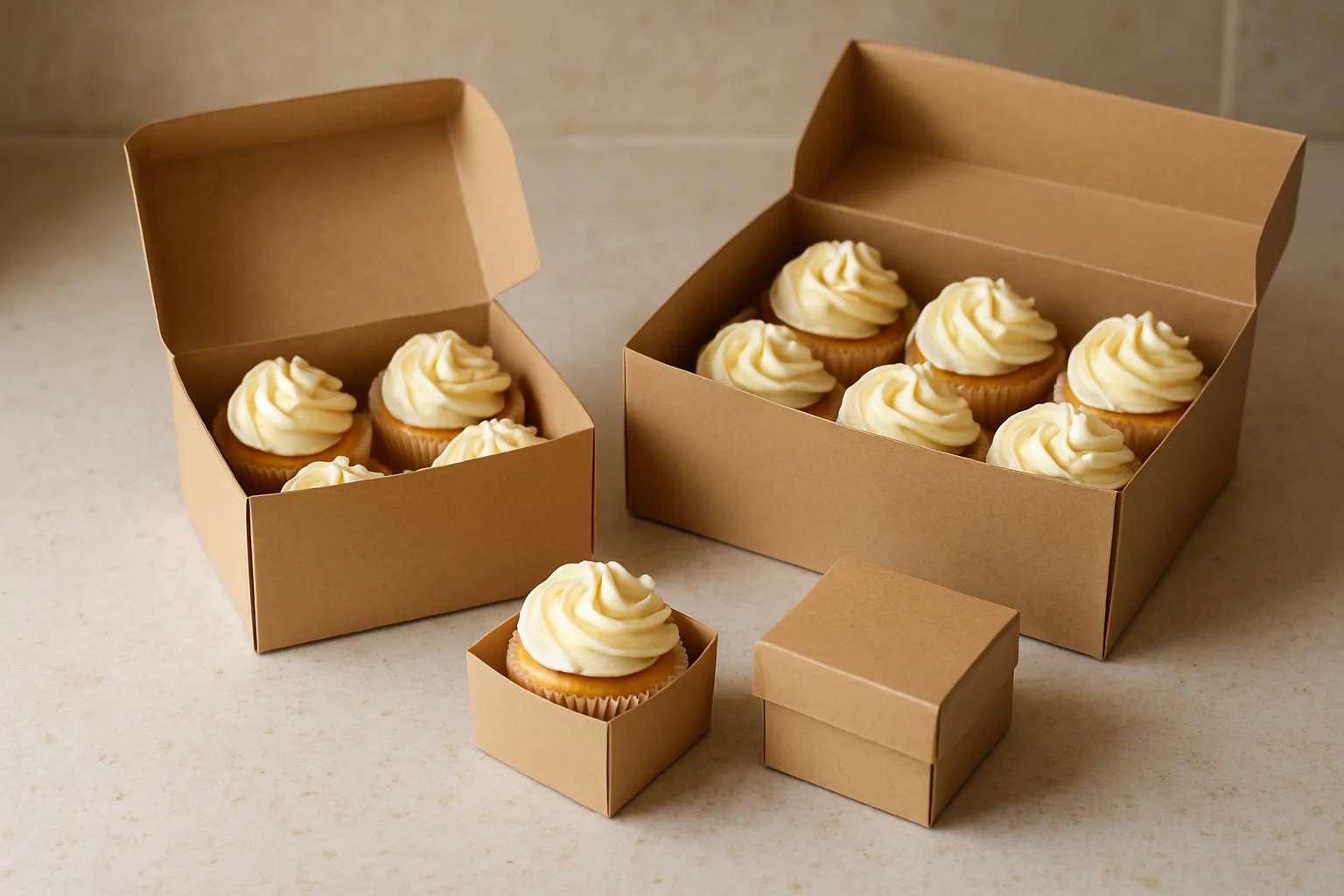
Define exactly what your base price includes: cupcake size, cake flavour, standard buttercream swirl, liner and any basic sprinkles. Keep filled centres, elaborate piping and toppers outside that base unless every order includes them.
If you already know your recipe cost, check what it leaves out:
- Labour: preparation, portioning, decorating and cleaning. Allocate shared work across the batch without counting the same time twice.
- Overhead: a reasonable share of electricity, equipment and other business costs.
- Waste: failed cupcakes, leftover icing and other expected losses.
- Packaging: liners per cupcake, then boxes, inserts, labels and bags per order.
Keep a separate packaging line even if the amounts look small. If liners are already included in your recipe materials, don't add them again when costing the box.
For the broader batch-costing method, use our guide to recipe costs and product profit. Here, the next decision is how that batch becomes different cupcake orders.
Hypothetical example: a batch produces 24 saleable standard swirl cupcakes. Ingredients, including a waste allowance, cost $18; liners cost $2.40; 72 minutes of labour at a chosen $30 an hour costs $36; and allocated overhead is $6.
Base cost = ($18 + $2.40 + $36 + $6) ÷ 24 = $2.60 per cupcake. The $30 labour rate is an example costing assumption, not a statement about employee pay requirements.
Turn the base cost into single, six-pack and dozen prices
Use this cupcake pricing formula for each order size:
Order cost = cupcake quantity × base cupcake cost + order packaging + extra order labour.
Then, if your selling fees include a percentage and a fixed amount:
Selling price = (order cost + fixed fee) ÷ (1 − target margin − percentage fee).
Enter percentages as decimals. A 30% margin is 0.30. This isn't the same as adding a 30% markup: a $20 cost multiplied by 1.30 gives a $26 price, leaving only a 23.1% margin before fees.
The following is a hypothetical Australian-dollar example for a seller who is not GST-registered. It uses a 30% target margin and an assumed selling fee of 3% plus $0.30 per order. Those fees are illustrative, not a quote for Vendl or a payment provider. Use your actual combined platform and processing fees.
| Cost or price | Single | Six-pack | Dozen |
|---|---|---|---|
| Cupcakes at $2.60 each | $2.60 | $15.60 | $31.20 |
| Box, insert and label | $0.60 | $2.40 | $3.80 |
| Extra packing and order handling | $0.50 | $2.00 | $2.00 |
| Total order cost | $3.70 | $20.00 | $37.00 |
| Calculated price, rounded to cents | $5.97 | $30.30 | $55.67 |
| Chosen selling price | $6 | $31 | $56 |
For the six-pack, the calculation is ($20 + $0.30) ÷ (1 − 0.30 − 0.03) = $30.30, rounded up to a $31 selling price. For the dozen, it is ($37 + $0.30) ÷ 0.67 = $55.67, rounded up to $56.
At $56, assumed fees are $1.98. Subtract those and the $37 order cost, and $17.02 remains: a 30.4% margin after the modelled costs and fees, before income tax. Your labour has already been included as a cost; this remainder isn't your entire payment for doing the work.
These aren't recommended market prices. Replace every assumption with your own costs. If you're GST-registered, confirm the tax treatment and use a consistent costing basis before setting customer-facing prices.
Use box pricing when the order creates the work
A per-cupcake price works well for an identical cupcake sold from an existing batch. It becomes less useful when an order needs its own baking run, presentation packaging or design setup.
For example, a request for six cupcakes in a unique colour may take almost as much colour-mixing and cleanup time as twelve. Dividing all that work into a tiny unit price hides why the smaller order costs more per cupcake.
Use a box total and a clear minimum order where appropriate. You can still show the equivalent unit price, but quote the actual package: quantity, flavour allowance, decoration and packaging.
Existing sellers illustrate these distinctions: Gg's Cupcakery's price guide separates flavour tiers, minimum quantities and decorating extras. That is useful context for structuring your menu, not evidence that its prices will cover your costs.
Price mixed flavours, custom decorating and minis separately
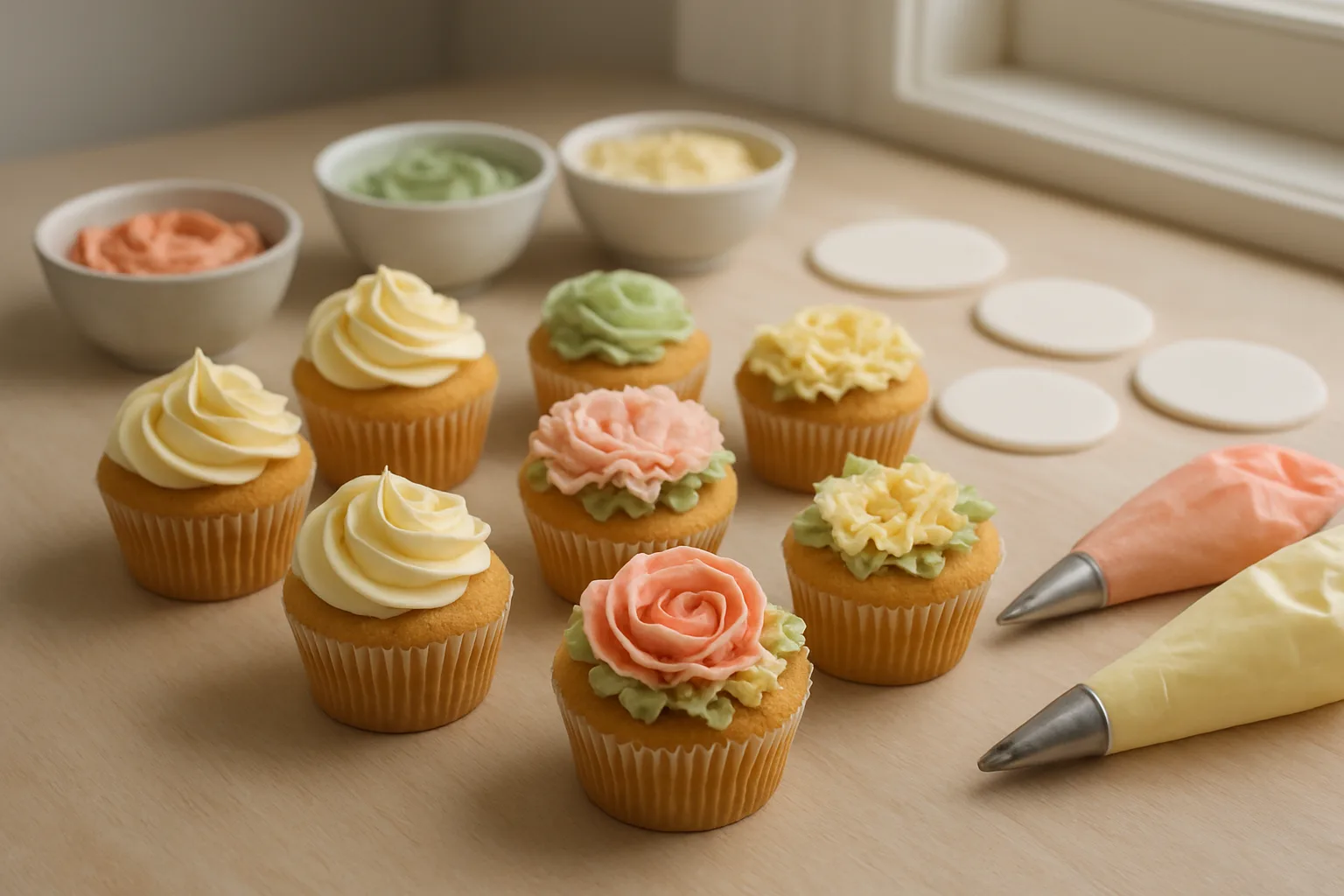
| Order type | What changes | Practical pricing approach |
|---|---|---|
| Standard swirl | Known recipe and repeatable finish | Use your base cupcake cost plus order packaging. |
| Mixed-flavour box | Extra recipes, fillings, mixing or unused portions | Include a planned mix, or charge for extra production work. |
| Custom decorated | Design setup, toppers, piping and colour work | Add setup costs per order and decorating costs per cupcake. |
| Minis | Different yield, handling time and packaging | Cost a mini batch separately, then price the box. |
Mixed flavours: charge for extra work, not variety alone
A six-pack with three flavours needn't cost more if those flavours are already on your pickup-day menu and the mix adds negligible work. A special request requiring two extra batters is different.
Hypothetical example: a requested mix adds $3 in ingredients and 15 minutes of labour at $30 an hour. The extra cost is $10.50. Using the earlier margin and percentage-fee assumptions, the price addition is $10.50 ÷ 0.67 = $15.67, rounded up to $16. There is no extra fixed payment fee if it remains one order.
If that makes a small box unattractive, offer the scheduled mixed box instead, or require a larger quantity for a specially requested flavour. Don't absorb a separate production run just to keep every six-pack at the same price.
Custom decorations: split setup from repetition
For toppers, edible images and detailed piping, record both the materials and the minutes. Include design preparation, supplier delivery where relevant, cutting, colour mixing, assembly and cleanup.
A useful quote structure is standard box + custom setup + per-cupcake decoration. Recover the setup cost once per order. Multiply the repeated work by the number of cupcakes, then apply your margin and fees to the additional costs.
Describe the included finish precisely. “Two buttercream colours and one simple topper per cupcake” is easier to quote consistently than “custom cupcakes”.
Minis: smaller ingredients don't mean half the price
Cost minis from their own saleable batch yield. They may use less batter, but every mini still needs a liner, handling and a finish. Time a representative batch and check the actual box and insert cost rather than halving your standard cupcake price.
Give quantity discounts only where costs support them
A dozen can be cheaper per cupcake because one larger box and one order-handling task may cost less than two separate six-packs. The discount should follow those savings, not a blanket percentage.
In the worked example, two six-packs cost customers $62, while a dozen is $56: a $6 saving, or about 9.7%. The dozen still clears the chosen margin because it has been costed independently.
Dropping the dozen to $54 would leave $54 − $37 − ($54 × 0.03 + $0.30) = $15.08, a 27.9% margin. That's below the 30% target.
Before discounting, ask what actually gets cheaper. A larger order of identical swirls might save setup time. A dozen individually designed cupcakes might not. Keep a calculated minimum selling price for each offer, and check promotions against it.
Turn the prices into Vendl pickup-day listings
Vendl's Production recipe costing lets you add materials, waste, labour and overhead, then link a recipe to a product with a units-per-product quantity and packaging cost. Its pricing calculator accepts a target margin and fees. Production costing is a Pro feature; use your actual selling fees rather than assuming every payment method costs the same.
There are two useful listing approaches, but choose one for each product:
- Fixed cupcakes with quantity deals: Vendl's Volume / bundle prices support exact quantity totals. Use this for a standard cupcake with set six- and twelve-cupcake prices.
- Boxes with flavour choices: create separate six-pack and dozen products, then use Product options for the flavour choices on each. This keeps each box's packaging and recipe-unit quantity clear.
Product options and volume prices cannot be used on the same Vendl product. Options also share the product's stock count, rather than tracking separate stock for each flavour. Cost each offered variation yourself; don't assume a base recipe calculation covers every custom extra.
When setting option prices, check the pricing mode: with one option group, each choice uses a full price, with zero falling back to the product price. With multiple groups, choice prices are additions to the product price. Test the customer-facing total before sharing the listing.
Use Vendl pre-order pages to offer the boxes for a collection day with an order closing time. Connect Stripe or Square and choose payment in full if you want customers to pay when they reserve their boxes.
Keep a short checklist for fast cupcake quotes
Before sending a price or publishing a pickup menu, confirm:
- Quantity and size: standard or mini, and the number in each box.
- Flavours: a scheduled mix or a separately costed special request.
- Finish: the included swirl, colours, fillings and toppers.
- Packaging: one shared box or individual presentation boxes.
- Total: all extra work, selling fees and the margin check included.
- Collection: pickup day, order deadline and payment arrangement.
Save repeatable offers as named packages, and reserve individual quotes for genuinely different work. For a more involved cake-and-cupcake booking, our guide to custom orders, deposits and pickup plans covers the handover side.
Once you've costed your cupcake boxes, create a Vendl account to turn those prices into pickup-day pre-orders.
Frequently asked questions
- Should I charge for time when cupcakes are in the oven?
- Count the time the order genuinely occupies. If you can do other paid production work during baking, avoid charging the same labour minutes to both batches. If the bake requires your attention and prevents other work, allow for that time in your costing.
- What if customers won't pay my calculated cupcake price?
- Check whether you can simplify the finish, limit flavours, batch orders on one pickup day or change the pack size. If the offer still cannot cover your costs at a price buyers accept, reconsider the offer rather than removing your labour from the calculation.
- How often should I review my cupcake prices?
- Review them when ingredient or packaging costs change, when a decoration takes longer than expected, or when you introduce a new order format. Keep the date of your last costing beside each standard offer so older assumptions are easy to spot.
- How should I price cupcakes when the customer supplies the toppers?
- Remove only the topper purchase cost you genuinely avoid. Keep the time needed to check, handle and place them, and confirm suitability before accepting the arrangement. A supplied decoration doesn't make the decorating work free.
Get new guides by email
Practical guides for stall, market and home-food sellers. No spam, unsubscribe any time.
Keep reading
Set crochet prices that pay for your time, not just your yarn
A fair crochet price covers more than yarn. Work out your sustainable price, allow for fees and GST, then check ready-made pieces, custom orders and bundles before you list them.
Reset your market stall prices without a card surcharge
Australia’s card-surcharge ban changes what customers pay, not whether you have processing costs. Here’s how to build those costs into clear stall prices and check the result against your orders.
Which products are worth making? Cost your batches before changing prices
A busy bake day doesn't tell you which products pay for your time. Cost a realistic batch, compare what each item earns, and decide where a price change will actually help.