How to start a soap business from home: checks before your first sale
Published By Jono Farrington · 8 min read
Starting a soap business in Australia means checking your name, business and tax registrations, AICIS obligations and labels before taking orders. Then cost a complete batch, including your time and wastage, and launch a small range with a reliable stock count. Buying ingredients locally does not, by itself, settle whether your soap-making process needs AICIS registration.
This checklist puts those decisions in order. It is a business setup guide, not a soap-making safety course or individual legal or tax advice.
1. Check your name before paying for packaging
Shortlist a few names before ordering printed wrappers, buying a domain or committing to a market banner. Search for similar names and logos using IP Australia's trade mark search guidance, which recommends TM Checker as a first check.
Look beyond an exact spelling match. A similar-looking or similar-sounding name is worth investigating before you invest in it. Treat a preliminary search as a screening step, not a guarantee that your name is safe to use.
- Choose a short list of names that fit the range you expect to sell.
- Check trade mark risk before spending on branding.
- Confirm whether your chosen trading name needs business-name registration.
- Only then commit to domains, printed packaging and market materials.
Do you need a business name before your first market? Resolve whether registration is required before trading under the proposed name, rather than treating it as a task for when sales grow. You can test packaging sizes with plain samples while those checks are underway.
2. Separate the ABN decision from the GST decision
An ABN and GST registration answer different questions. The Australian Government's ABN guidance says not everyone needs an ABN: you need to be running a business or other enterprise. If you are unsure whether your soap-making is still a hobby or has become a business, resolve that before applying.
For an ordinary Australian business, the GST registration guidance gives a $75,000 turnover threshold for compulsory registration. Registration below the threshold is optional, and you need an ABN to register for GST online. Turnover is not the profit left after ingredients and market fees.
Should you register early? Do not assume it is automatically better. Ask an accountant how voluntary registration would affect your customer prices, purchasing and administration. Monitor turnover as you grow rather than waiting until your annual records are finished.
From the first batch, keep supplier invoices and records of sales, packaging, labour estimates and selling costs. These also make your pricing decisions much easier.
3. Follow the AICIS path for how you actually make soap
AICIS obligations depend on what you make or import, not just how many bars you sell. The AICIS soap-making and importing guidance distinguishes manufacturing soap in Australia, melt-and-pour work, buying finished soap locally and importing soap or ingredients.
| Your starting point | What to check before ordering |
|---|---|
| Australian-bought oils and lye | Check the soap-manufacturing pathway. Local purchasing alone does not answer the manufacturing question. |
| Australian-bought melt-and-pour base | Check the specific melt-and-pour conditions against your process and additions. |
| Imported ingredients, base or finished soap | Check the importing pathway separately, before committing to an overseas order. |
| Finished soap bought in Australia for resale | Read the local-purchase guidance and separately check the labels and claims you will use. |
A few bars a month is not enough information to declare yourself exempt. Do not treat registration, an exempted introduction category and reporting obligations as interchangeable. Check each obligation against your ingredients, quantities, sourcing and process.
Make a one-page supplier and process record: what you buy, who supplies it, whether you import it yourself, and what you do to it. Keep quantities as well as invoices. That gives you something concrete to compare with the AICIS guidance or send with a question.
For your first range, local sourcing may be easier to organise. That is a practical purchasing choice, not a promise of exemption. Compare the total purchasing cost and administrative work before choosing an overseas supplier on unit price alone.
4. Check the finished label, not just the wrapper design
AICIS directs soap sellers to Australian cosmetic labelling requirements. Do not assume that calling a bar handmade or natural removes that check. If your product or its intended claims sit outside ordinary cosmetic use, confirm the applicable rules before printing claims on the packaging.
The Australian Government's product labelling guidance covers cosmetic ingredient labelling, packaged-goods requirements, packer name and address requirements, and truthful country-of-origin claims.
Use this as a review checklist, not a ready-to-print legal template:
- Ingredients: check the cosmetic ingredient declaration requirements for your finished formulation.
- Packer details: check the required name and address for your packaged product.
- Quantity: confirm the applicable trade measurement requirements, including how quantity must be stated.
- Claims: check any statements about origin, ingredients or product benefits before using them.
- Gift packaging: review both the individual bars and the final box, rather than assuming an outer sleeve settles everything.
Do this for the actual format you intend to sell: a wrapped bar, an unwrapped market bar and a mixed gift box need separate consideration. Ask where required information must appear for that format. Treat website information as additional buyer information, not a reason to skip the physical label check.
For your own records, link each label version to its recipe and batch record. If you change a fragrance or supplier, review the declaration before using the remaining printed wrappers.
5. Price a saleable batch, including your time
Cheap ingredients do not necessarily make a profitable bar. Cost the entire batch, then divide by the bars you can actually sell, not the number you hoped to produce.
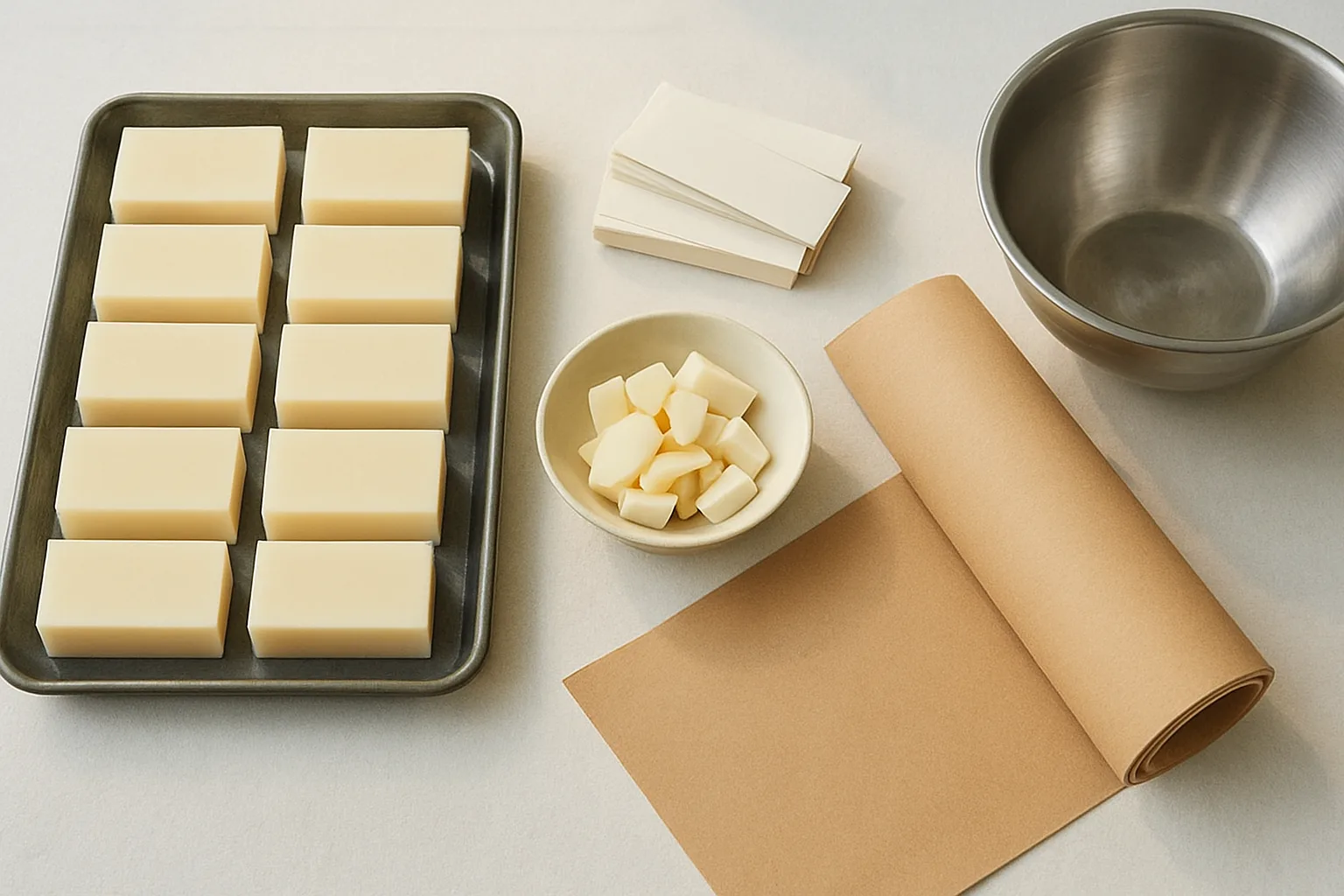
Hypothetical example: an Australian maker who is not GST-registered makes 40 bars, but keeps four out of sale as rejects or samples. All amounts below are illustrative AUD cash costs, including any GST paid on purchases.
| Batch cost | Amount |
|---|---|
| Oils, lye, fragrance and other ingredients | $60.00 |
| Packaging for 36 saleable bars | $18.00 |
| Labour: 2.5 hours × $30 | $75.00 |
| Allocated overhead | $15.00 |
| Total batch cost | $168.00 |
| Cost per saleable bar: $168 ÷ 36 | $4.67, rounded |
At an $8 retail price, the amount remaining is approximately $3.33 per bar before payment fees and selling costs. That is about 41.7% of the selling price, not a 41.7% markup on cost.
Now test a market day. If the stall fee and travel total $90 and you sell 30 bars, those costs allocate another $3 to each bar sold: $90 ÷ 30. At $8 each, only about $0.33 per bar remains before payment fees and market-day labour. The manufacturing labour in the table does not pay for your time behind the stall.
That is your cue to reconsider the price, event, expected sales or product mix. Do not discount for a market simply because customers are collecting in person. Cost a gift box separately too, including its box, filling, assembly time and the bars inside.
Use Vendl Production to repeat the calculation
Vendl's Production tools, included with Pro, let you build a recipe from materials and add waste, labour and overhead. Link it to a product, add packaging and use a target margin and fee assumptions to test a suggested price. The batch costing and product profit guide explains the workflow.
Use your actual payment costs rather than accepting a default fee assumption without checking it. A suggested price is a planning tool, not a guarantee of take-home profit.
6. Choose a small range and one reliable stock workflow
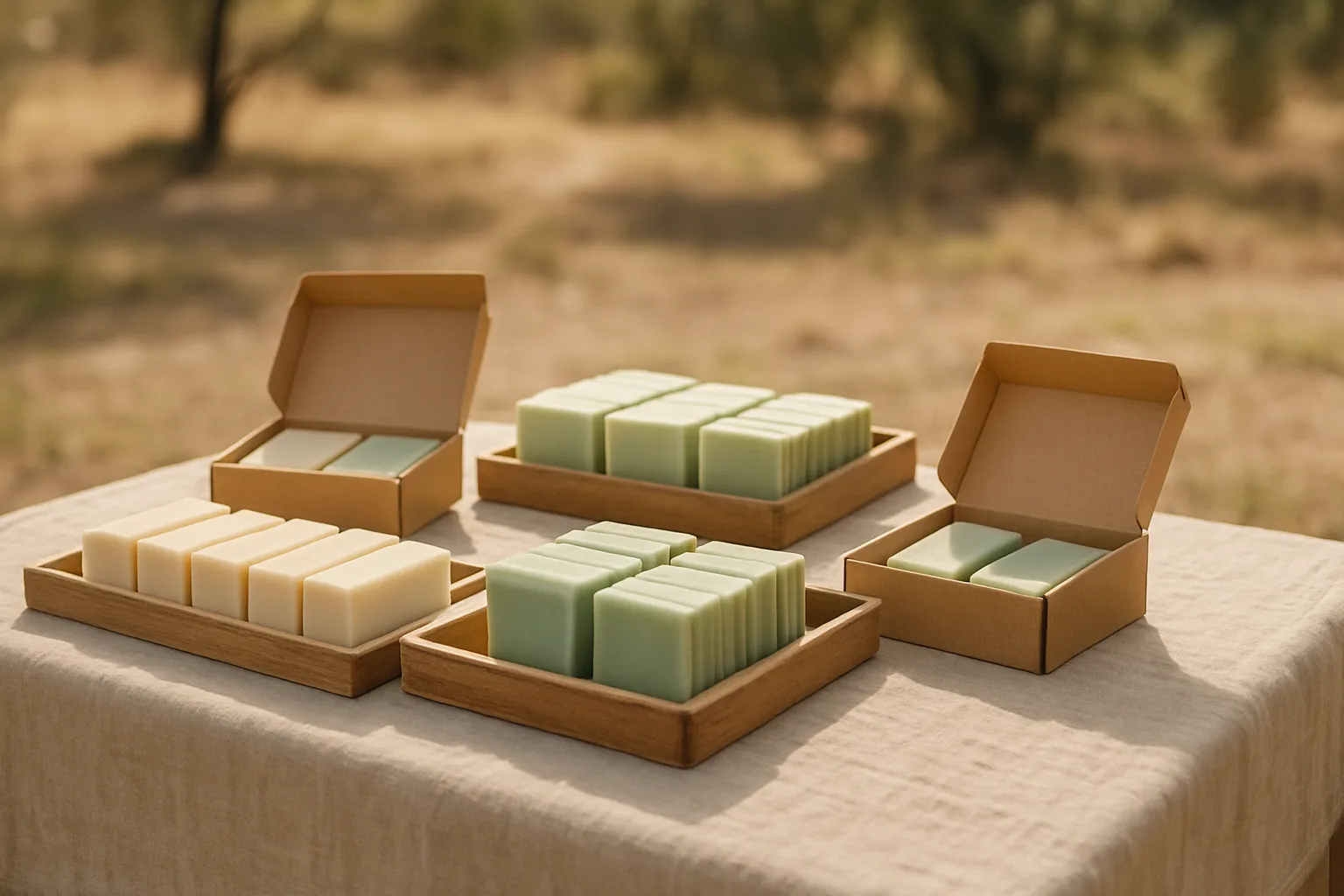
Start with a range you can count easily, such as two scents in one bar size. Add gift boxes or more sizes when you understand what sells and how long replenishment takes.
| Decision | Simple first setup |
|---|---|
| Bars only or gift boxes? | Start with bars. If adding boxes, set aside their contents so the same bars are not also available individually. |
| Scents and sizes? | Use separate products wherever you need independent stock counts. |
| Markets only or online too? | Start with one route if that is easier. If using both, keep purchases flowing through the same catalogue and stock records. |
Vendl's online shop and QR checkout give you a shop link to share online and a QR sign to print for your market table. Add a photo, price, stock count and low-stock alert level for each product.
Important for soap variants: Vendl product options can offer choices such as scent or size, but those choices share one product stock count. If you have 12 lavender bars and eight unscented bars, create separate products when you need those quantities tracked independently. Do not use a shared count of 20 as if it tracked each scent.
For a first gift-box launch, a straightforward approach is to pre-pack a fixed number of boxes, remove their bars from loose-bar availability and give the boxes their own stock count. Do not assume a gift-box sale will automatically deduct its component bars.
- Count sale-ready stock. Keep unfinished or otherwise unavailable batches out of the quantity shoppers can buy.
- Test the buying route. Open the shop through the printed QR and check the product choices and checkout before market day.
- Keep every sale accounted for. Encourage purchases through the shop checkout. If something sells outside that workflow, adjust stock promptly.
- Review the inventory report. Check low-stock products, recent sales and days of stock cover, then physically count what remains.
- Record the next batch. Vendl Production can deduct materials, increase product stock and update its cost when you record a batch. Choose the recording point carefully so stock added for sale is genuinely available.
Low-stock alerts can prompt a review, but allow for your own making and release schedule. A warning when only two bars remain may arrive too late for a product you cannot replenish immediately.
Once the name, compliance checks, labels and batch economics are ready, set up your first soap range in Vendl's online shop and use the same catalogue for your online orders and market QR sales.
Frequently asked questions
- Should I launch with several scents so customers have more choice?
- Start with fewer scents if each one creates a separate batch, label and stock count. Add a scent when you can explain who it is for, what it costs to make and how you will manage the extra stock.
- How should I account for free soap samples?
- Keep samples out of saleable stock and give their cost a clear place in your records. You can allocate them to the batch or to a marketing budget, but avoid counting the same cost twice.
- Can I use my retail price for wholesale orders?
- Work backwards from the proposed wholesale price using your batch cost, packaging, order-handling time and selling costs. A larger order is not automatically profitable. Set a minimum quantity only after checking the numbers.
- What should I ask a market organiser before booking?
- Ask about total stall costs, insurance requirements, product restrictions, cancellation terms and the practical conditions for your display and checkout. Use those answers in your event budget before committing.
- Does Vendl check whether my soap is compliant?
- No. Use Vendl to organise products, costs, stock and orders. Confirm registration, labelling, product safety and claims requirements with the relevant authorities or qualified advisers.
Get new guides by email
Practical guides for stall, market and home-food sellers. No spam, unsubscribe any time.
Keep reading
Starting a home food business in Victoria: from kitchen checks to your first order
Before buying equipment or taking orders, check whether your Victorian home kitchen suits your proposed menu. Follow these steps from council questions to a simple paid ordering flow.
Which products are worth making? Cost your batches before changing prices
A busy bake day doesn't tell you which products pay for your time. Cost a realistic batch, compare what each item earns, and decide where a price change will actually help.
Selling cakes from home: check your recipe before your first order
A plain cake and a cream-filled celebration cake can get different answers from your council. Here’s how to check your recipes, kitchen and selling arrangements before taking orders.