Set crochet prices that pay for your time, not just your yarn
Published By Jono Farrington · 8 min read
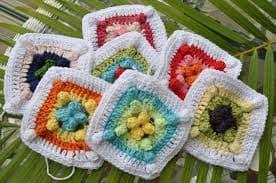
To price crochet items, add materials, packaging, paid making time and overhead, then allow for payment fees and profit. That gives you a sustainable starting price. Check it against genuinely comparable handmade pieces, but don't cut your hourly pay just to match the cheapest listing.
The useful distinction is between paying yourself for the work and making a business profit. Your labour belongs in the cost before profit is calculated. All examples below are hypothetical and in AUD; GST treatment is stated separately.
A crochet pricing formula you can reuse
Start with this worksheet for each product:
Item cost = materials + packaging + labour + allocated overhead.
If you aren't registered for GST and want a set dollar profit:
Selling price = (item cost + desired profit + fixed payment fee) ÷ (1 − percentage fees).
Enter percentage fees as a decimal, so 4% becomes 0.04. This formula assumes the percentage applies to the whole selling price and the fixed fee applies once to the order. Use the actual fee structure for your checkout, not an assumed industry rate.
This follows the principle in business.gov.au's pricing guidance: include materials, labour, overhead and taxes, then allow for profit. The fee calculation matters because a percentage fee grows as your selling price grows.
| Cost input | What to include |
|---|---|
| Yarn | Grams used × cost per gram, plus a realistic allowance for unusable waste. |
| Notions and findings | Buttons, clasps, lining, stuffing, elastic and any other components. |
| Labels and packaging | Product labels, care cards, bags, boxes and wrapping. |
| Labour | Crocheting, joining, finishing, blocking preparation, checking and packing. |
| Overhead | Tool wear, admin, stall fees, apps, marketing and an appropriate workspace allowance. |
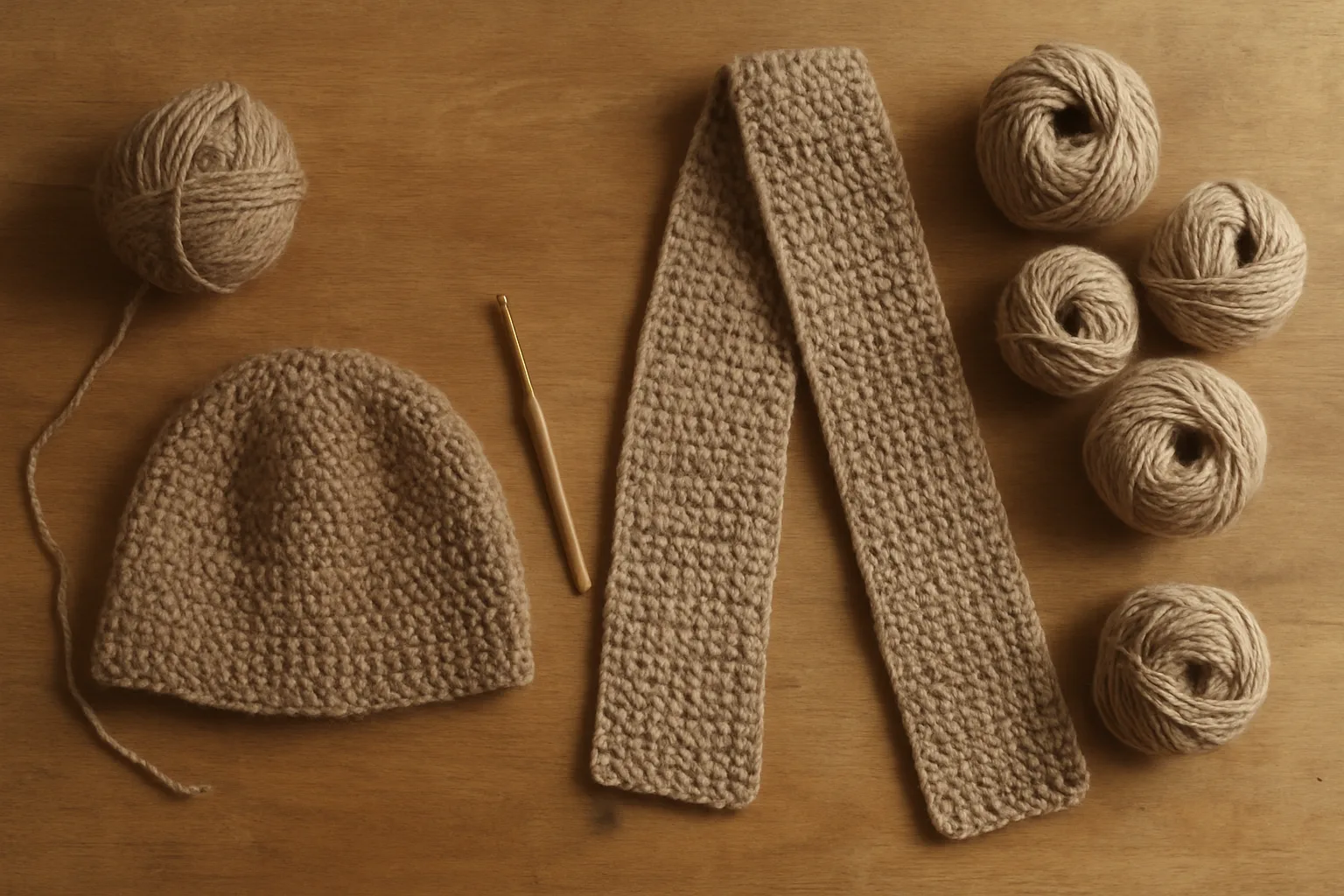
For yarn, a $15 ball weighing 100 g costs $0.15 per gram. A beanie using 80 g consumes $12 of yarn; a scarf using 150 g consumes $22.50. Price the amount used, rather than charging every item for a whole ball or treating leftover yarn as free.
Allocate overhead using a realistic sales estimate. For example, $100 of monthly overhead spread over 20 expected sales is $5 per item. If a market costs another $60 and you expect 20 sales there, allow another $3 per market item. Count each expense once.
Choose an hourly rate before choosing the selling price
Time a few normal makes, including finishing work. Use a repeatable production time, not your fastest attempt. Separate one-off pattern development from the time needed to make each repeat item.
As of 27 October 2026, the Fair Work Ombudsman's minimum wages guidance states that Australia's National Minimum Wage is $26.44 an hour from 1 July 2026. It applies to adult employees not covered by an award or enterprise agreement. It is not a prescribed pricing rate for a self-employed crochet seller.
Use that distinction carefully: a wage reference can help you question a very low labour allowance, but it doesn't calculate your business rate. Your chosen rate also needs to make sense alongside unpaid business time and the income you need.
For the examples here, we'll use $30 an hour as an illustrative rate, not a recommended minimum. A one-hour beanie has $30 of labour. A three-hour scarf has $90, even if its yarn cost looks modest.
Don't charge all the passive drying time of a blocked item as hands-on labour. Do count the work of preparing, pinning, checking and packing it. If admin is already included in overhead, don't add the same time again.
Worked example: a beanie that covers costs and profit
This hypothetical seller isn't registered for GST. They want $10 profit after paying for their time and costs.
| Beanie cost | Amount |
|---|---|
| 80 g of yarn at $0.15 per gram | $12.00 |
| Notions and label | $1.00 |
| Packaging | $2.00 |
| Waste allowance | $2.00 |
| One hour of labour at $30 | $30.00 |
| Allocated overhead | $5.00 |
| Total item cost | $52.00 |
Assume, purely for this example, combined percentage fees of 4% and a fixed fee of $0.30 per order. These are not quoted Vendl or processor rates.
Price = ($52 + $10 + $0.30) ÷ 0.96 = $64.8958, rounded up to $64.90.
At a shelf price of $65, fees are ($65 × 4%) + $0.30 = $2.90. That leaves $65 − $2.90 − $52 = $10.10 profit, with the $30 labour allowance already covered.
Cost recovery isn't the same as a sustainable target
Without the $10 profit, the cost-recovery floor is ($52 + $0.30) ÷ 0.96 = $54.48, rounded up. That covers the modelled costs but leaves almost nothing for surprises or reinvestment. Treat it as a warning line, not your normal selling price.
There isn't one reasonable profit margin for every crochet business. Choose a target that can support the business after your labour is paid, then test whether the product can sell at that price.
Margin and markup aren't interchangeable. Adding 20% to $50 produces $60, but the $10 profit is only 16.7% of the selling price, before any fees. The beanie's $10.10 profit on a $65 sale is about a 15.5% margin. Neither percentage is a benchmark.
Handle payment fees and Australian GST separately
Keep three costs distinct: a monthly platform subscription belongs in overhead, a percentage transaction fee belongs in the percentage-fee input, and a fixed processing charge belongs in the per-order input. For deposits and balances, check how many payment charges your provider applies.
As of 27 October 2026, Vendl's Free plan has a 2.5% Vendl fee on card, Tap & Go and pay-later payments, with processor fees charged separately. Vendl Pro removes the Vendl fee, not the processor's fee. Check your connected provider's current charges before filling in the worksheet.
Australian government GST guidance says GST is 10% on most goods and services, and businesses must register when GST turnover reaches $75,000 or more. New businesses expecting to reach that turnover in their first year should register. This is a turnover test, not a profit test.
- Not registered: don't add a GST component. Use the costs you actually pay.
- Registered: work out your costs and profit on a consistent GST-exclusive basis, accounting for any GST credits you can claim. Set the customer's final price to include GST.
For a taxable $110 sale, the GST component is $10, leaving $100 of revenue before costs and fees. Under the hypothetical 4% plus $0.30 fee structure, fees calculated on the $110 payment would be $4.70, not $4.30.
Where those assumptions apply, the registered-seller version is:
GST-inclusive price = 1.10 × (item cost + desired profit + fixed fee) ÷ (1 − 1.10 × percentage fees).
Use costs and fee inputs consistent with your GST-credit treatment. Ask your accountant to check the setup if you're unsure; this is general pricing information, not individual tax advice.
Price ready-made, made-to-order and custom work differently
A different ordering method doesn't automatically justify a higher price. Extra work or cost does.
| Order type | Pricing approach |
|---|---|
| Ready-made stock | Use repeatable production time and allow for the selling channel's costs. |
| Made-to-order repeat design | Use the base price, adding actual extra costs such as special yarn purchasing or individual packing. |
| Custom commission | Quote for consultation, design changes, sampling, unusual materials and extra finishing time. |
For a custom piece, write down the agreed dimensions, yarn, colours, included changes and collection date before starting. A deposit changes when money arrives; it doesn't reduce the total price needed to cover the job.
Keep the crochet labour rate consistent across markets and local pickup. What changes is the cost of serving the order: stall attendance, travel, packaging or additional customer communication.
Discount bundles only when the numbers support them
A bundle can share packaging, order admin and a fixed payment fee. It doesn't magically remove the hours spent crocheting both pieces.
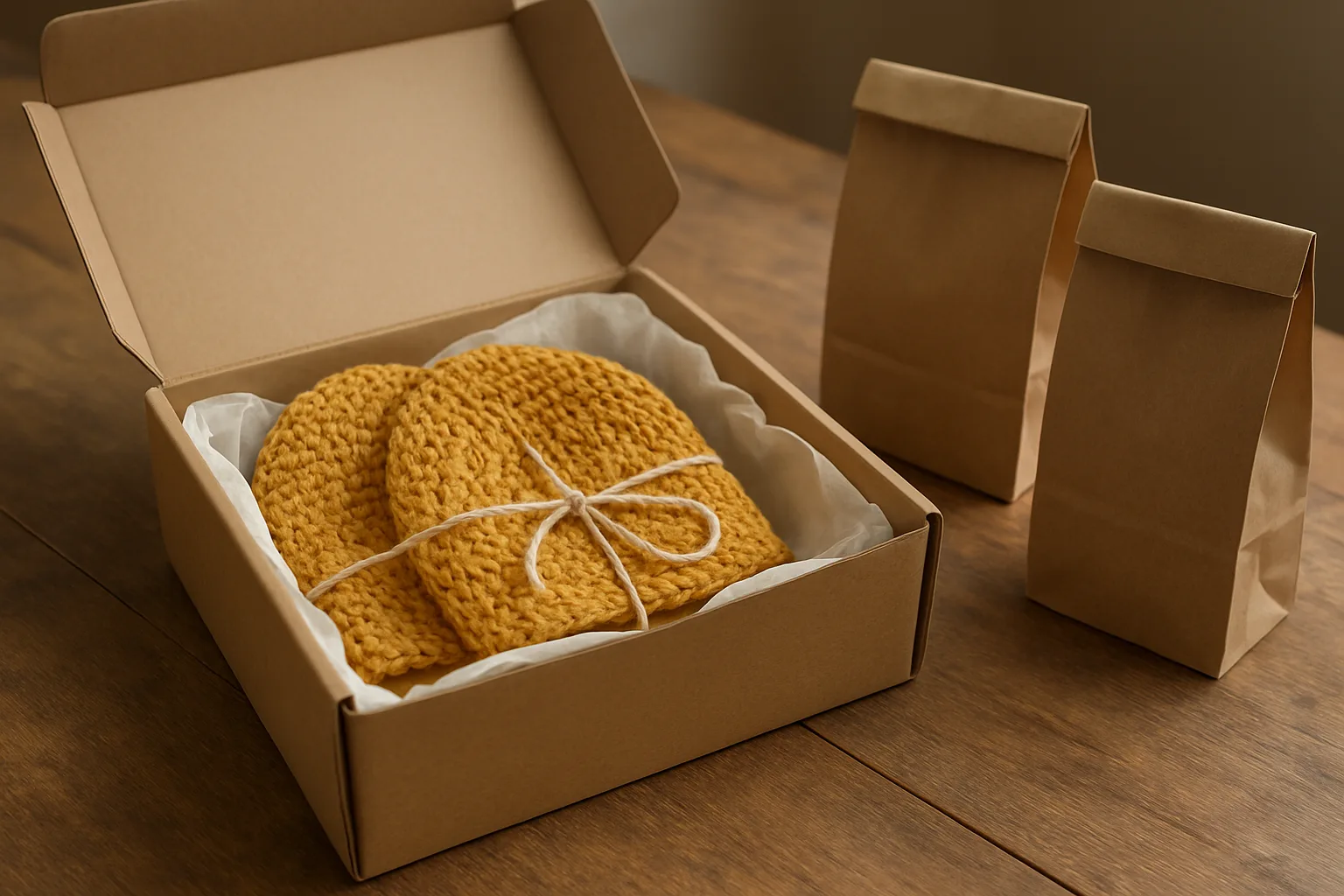
For example, two of the $65 beanies normally sell for $130. Suppose packing them together saves $3, bringing their combined item cost from $104 to $101. Keeping $20 total profit with the same hypothetical fees gives:
Bundle price = ($101 + $20 + $0.30) ÷ 0.96 = $126.36, rounded up.
A $127 bundle would preserve that target. A $110 bundle would not. Recalculate a beanie-and-scarf set from both products' costs rather than applying an automatic percentage discount.
For larger orders, offer a discount only where you can identify a saving, such as batch preparation or simpler packaging. If every extra item takes the same time, there may be little room to discount.
Check whether buyers will pay without erasing your wage
Compare like with like: handmade construction, fibre, size, finishing, packaging and delivery charges. An advertised price is a comparison point, not proof that the item sells at that price.
- Show the value clearly. Describe the yarn, dimensions, care needs and finishing. Use photos that show stitch detail and scale.
- Test a small range. Offer a few pieces or limited pre-orders at your calculated price. Track paid orders, not just likes.
- Ask what stopped the purchase. Price, colour, fit and collection timing are different problems.
- Change the product before cutting your wage. Try a simpler stitch, smaller size or fewer finishing steps, then recost it.
If comparable buyers won't pay your sustainable price, that product may not suit that market. Keep it as a premium commission, try another audience or stop offering it commercially.
Underpricing leaves less room for mistakes and can make later increases harder to explain. It can also make your product's positioning less clear. A low price isn't automatically a stronger offer.
Put your calculated prices to work in Vendl
Once you've costed the product, turn it into a clear offer through Vendl's shop and stall checkout. Add the product's photo, selling price and stock rather than rebuilding the quote in every message.
- Sizes and colours: use Product options for choices that share one stock count. If a larger size needs a different price, give it a separately priced product listing rather than assuming all sizes cost the same.
- Quantity offers: use Volume / bundle prices for exact quantity totals, such as your calculated two-beanie offer. For a mixed beanie-and-scarf set, create a separately costed set product.
- Made-to-order collection: use Vendl pre-order pages with an order deadline and collection date. Offer full payment, a percentage deposit or pay at pickup. Taking online payment or a deposit requires Stripe or Square.
- GST and records: if registered, enable Australian GST in Settings, then Tax. Vendl calculates GST inside your entered prices; it doesn't increase them. Export orders to review totals, tax, Vendl fees, processing fees and amounts received.
Pay at pickup leaves you exposed to a no-show after you've made the item, so consider a deposit for work you can't easily resell. Review the price when yarn costs, making time or selling costs change.
Start with one properly costed design, then create your Vendl account to list it and take made-to-order pre-orders.
Frequently asked questions
- How should I price crochet made with donated or leftover yarn?
- For a repeatable product, consider using the cost of replacing that yarn rather than zero. Otherwise your price may stop working when the free supply runs out. Keep your actual purchase records separate from this pricing assumption.
- Should I include postage in my crochet price?
- Either include it in the advertised product offer or show it separately, but calculate it deliberately. Allow for the parcel packaging, postage and time spent preparing the shipment. Check whether your payment provider also charges fees on the delivery amount.
- Should I charge customers for the time I spend learning crochet?
- For a repeat design, base your quote on a realistic, repeatable making time rather than every hour spent learning the craft. For a commission that needs new design or sampling work, agree on that paid work before starting.
- How should I handle a discount for friends and family?
- Calculate the normal price first, then decide what you personally want to give away. Record the reduction as a deliberate gift or discount rather than treating the reduced amount as evidence that your normal price is too high.
Get new guides by email
Practical guides for stall, market and home-food sellers. No spam, unsubscribe any time.
Keep reading
Reset your market stall prices without a card surcharge
Australia’s card-surcharge ban changes what customers pay, not whether you have processing costs. Here’s how to build those costs into clear stall prices and check the result against your orders.
Ready to sell homemade food online? Your first-order checklist
Before opening orders, check that your food, kitchen and selling arrangements are ready. Then put labels, payment terms and collection details into one clear first-order plan.
Book bigger custom cake orders with clear deposits and pickup plans
A bigger custom order needs more than a promise in your inbox. Agree the details, take payment to reserve the work, and set clear boundaries for changes and collection.