Starting a home food business in Victoria: from kitchen checks to your first order
Published By Jono Farrington · 7 min read
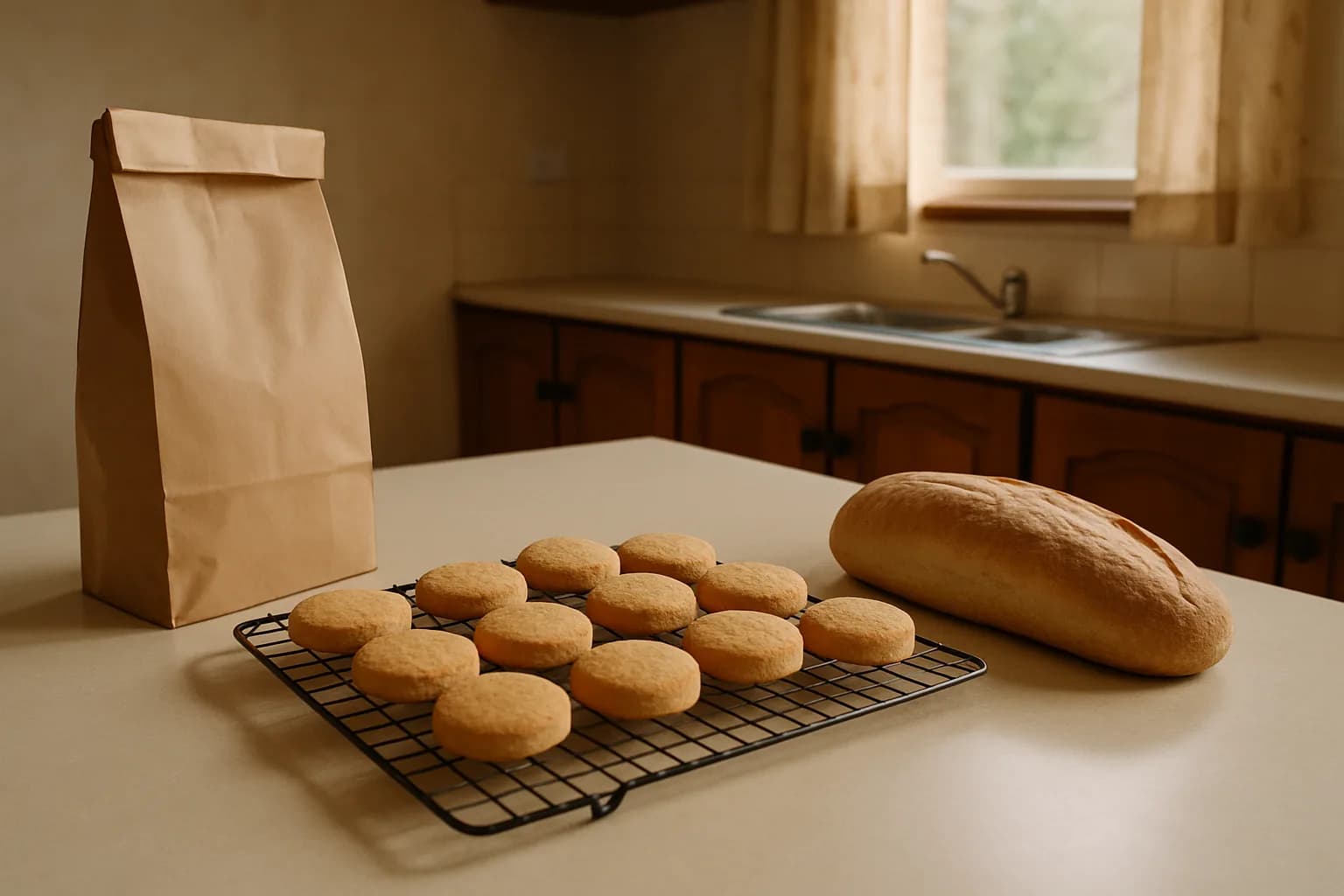
You may be able to sell food from your home kitchen in Victoria, but first discuss your products, preparation methods and customers with your local council’s Environmental Health Officer. Council determines your food business classification and the registration or notification pathway. Confirm kitchen suitability, planning requirements and food-safety obligations before spending on upgrades or accepting paid orders.
Victoria’s food business guidance says all food businesses must comply with the Food Act 1984, and a home kitchen must be able to prepare food as safely as commercial premises. A small menu or online-only ordering is not a substitute for checking the requirements.
Start with a product list, not a kitchen renovation
Your first useful document is a short description of exactly what you want to make. “Home baking” is too broad for a productive council conversation. List each product, its ingredients and fillings, how you will prepare and package it, and how it will reach the buyer.
For each product, write down:
- The recipe, including toppings, fillings and any variations.
- Your proposed batch size and production days.
- How ingredients and finished products will be stored.
- Whether you propose room-temperature, chilled or frozen storage, for council to assess.
- Whether buyers will collect, receive deliveries or buy at a market.
- Who you intend to sell to, including any wholesale customers.
Which foods are easiest to start with?
There is no confirmed statewide list in the supplied guidance that makes a particular home-made food automatically approved or assigns it a class. Treat a short menu with fewer preparation and handover steps as a practical starting point, not a legal shortcut.
For a hypothetical baker, the council discussion could compare plain biscuits or an unfilled loaf with a cream-filled cake or a savoury meal. Ask which recipes and storage arrangements are suitable for your kitchen. Do not assume that every biscuit is shelf-stable, or that every cake has the same requirements.
As a local example, the City of Monash’s home-based food business guidance limits domestic kitchens to small-scale, low- to medium-risk activities and directs high-risk or large-scale activity towards commercial kitchens. That is Monash’s guidance, not an approval for a home kitchen elsewhere in Victoria.
Before you spend money: separate the council checks
Planning permission, food business registration and food-safety documentation answer different questions. Business Victoria’s home-based business guidance says a council planning permit and other registrations or licences may be needed. Ask about these before committing to building work.
| Check | Who to contact | What to prepare | When |
|---|---|---|---|
| Planning and local approvals | Council planning team | Proposed hours, customer visits, deliveries and building changes | Before committing to premises changes |
| Food classification and registration or notification | Council Environmental Health Officer | Product list, preparation methods, customers and sales locations | At the initial enquiry |
| Kitchen assessment | Council Environmental Health Officer | Floor plan, equipment, sinks and storage arrangements | Before buying fit-out equipment or renovating |
| Food Safety Supervisor and Food Safety Program | Council Environmental Health Officer | Proposed food-handling processes and existing training details | Before booking training or preparing documentation |
| Inspection and permission to operate | Council food business team | Completed application, requested documents and ready premises | As directed by council, before opening |
The planning check concerns operating a business at the property. Food registration or notification concerns your food business and its classification. A Food Safety Program concerns documented food-safety arrangements, where required. None should be treated as a substitute for the others.
Ask council for the sequence, fees and current processing expectations in writing. There is no single confirmed statewide turnaround time or fit-out price to budget against.
Confirm your classification and food-safety requirements
Safe Food Victoria’s council registration guidance says councils classify food premises according to food-safety risk. It also distinguishes registration from Class 4 notification, so do not assume every home seller follows the same application pathway.
Ask your Environmental Health Officer:
- What classification applies to this menu and preparation process?
- Do I need registration or notification under Victoria’s food business system?
- Do I need a Food Safety Supervisor, and which training or certificate is appropriate?
- Do I need a Food Safety Program, and which records must I maintain?
- What must be completed before I can start trading?
Business Victoria says a Food Safety Program and Food Safety Supervisor Certificate may be needed depending on the food you sell. Do not buy a course simply because another home baker needed it.
If you plan to take online pre-orders for pickup, describe that arrangement to council too. You are still preparing food at home, and customer collection may matter to the property assessment. Treat online ordering as the way you organise sales, not evidence that council checks can be skipped.
Check the kitchen before buying extra sinks or storage
Will you need another sink, a separate pantry or a dedicated preparation area? The supplied Victorian guidance does not establish a universal answer. Have council assess your layout and activities before purchasing equipment.
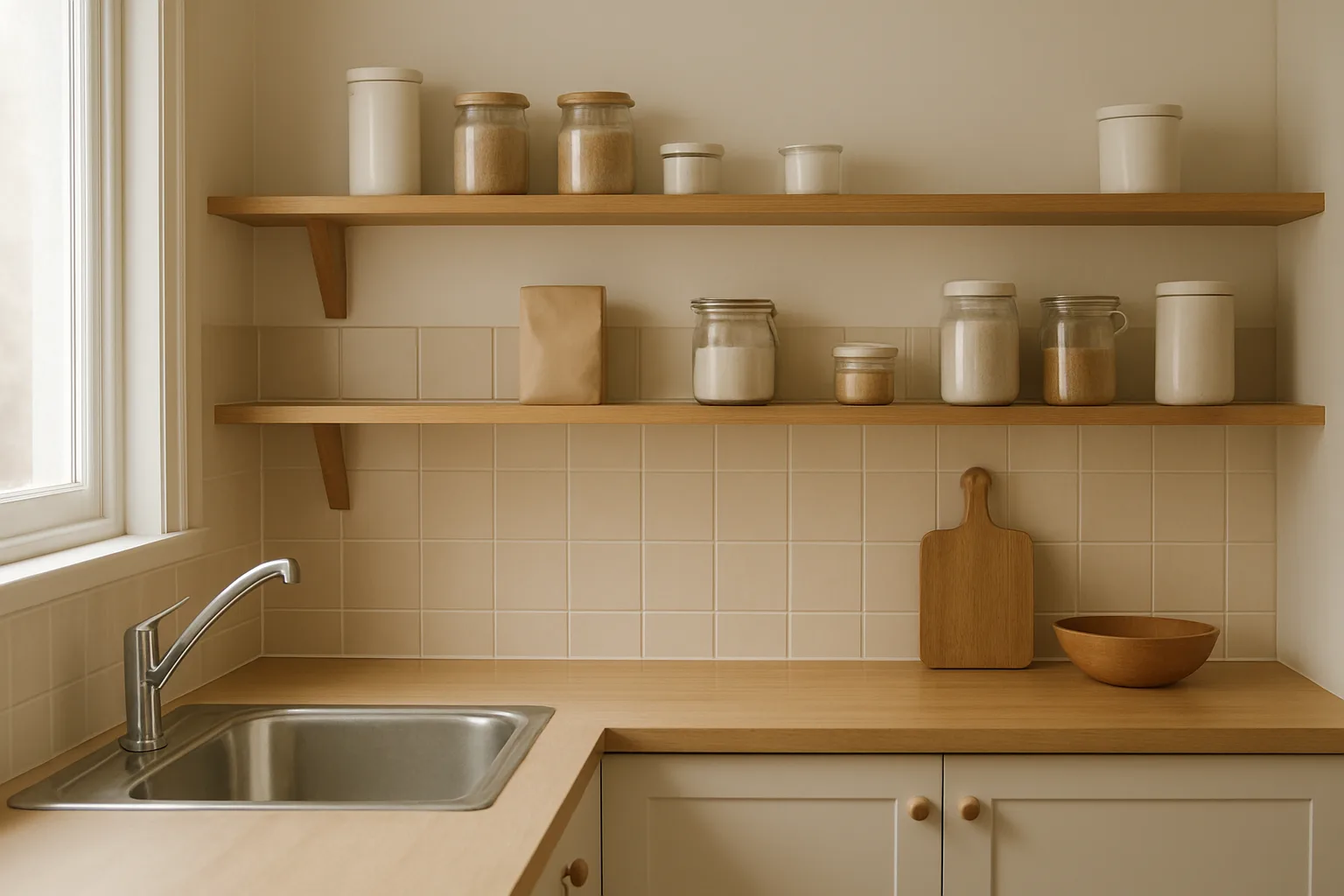
Mark these points on a simple floor plan and ask what needs changing:
- Separation: how business preparation will fit around household cooking, people and pets.
- Sinks and handwashing: where hands, utensils and food will be washed, and whether the proposed facilities are acceptable.
- Storage: where ingredients, packaging, finished food and cleaning chemicals will go.
- Cleaning: how benches, equipment and food-contact areas will be cleaned.
- Capacity: whether the proposed storage and equipment suit your largest planned batch.
These are assessment questions, not a statewide specification for mandatory upgrades.
What should you prepare for inspection?
Frankston City Council’s home-based food business process includes plan assessment before structural works, registration when premises are ready, and a final inspection before a Certificate of Food Act Registration. Its requested information includes owner details, trading name, ABN/ACN, floor plan, menu and Food Safety Supervisor details.
Use that as a preparation example, not a promise that another Victorian council uses identical steps. Keep your contact details, proposed trading name, ABN/ACN if applicable, product list and floor plan together. Add any requested training documents and food-safety records. Before inspection, check that the actual layout matches the plans and that requested work is complete.
Plan packaging, pickup, delivery and markets before opening
Food safety does not stop when baking or cooking finishes. Business Victoria includes labelling, storage and selling within the requirements for starting a Victorian food business.
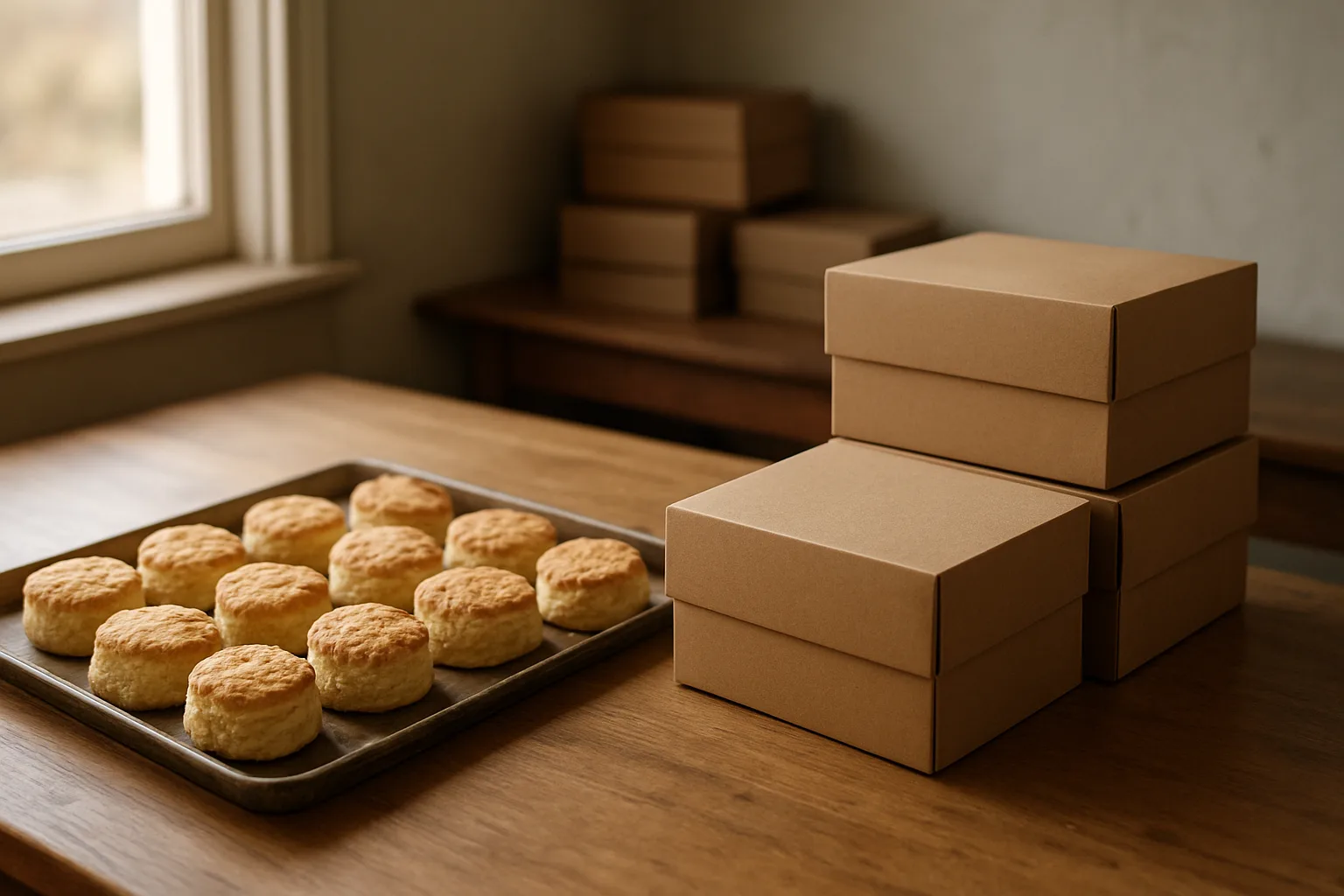
Before ordering packaging in bulk, ask council to confirm the information your products need, including ingredient and allergen declarations, date marking and storage instructions where applicable. Keep the ingredient information you use for each recipe, and review it whenever you change a supplier or ingredient. Do not guess a shelf life or assume an online product description replaces required package information.
For pickup, decide where packed orders will wait and how you will handle late customers. For delivery, confirm suitable packaging, temperature control and transport arrangements. Safe Food Victoria’s food business home delivery guide addresses perishable food transport; use it alongside advice for your actual menu rather than treating every product or delivery route alike.
Adding a market or event
In Victoria, Business Victoria says that when food is sold somewhere other than where it was prepared, both premises need to meet the requirements. It also says to apply for a Statement of Trade before selling at an event. Safe Food Victoria says temporary and mobile food premises must use Foodtrader to manage registration and activities.
Tell council about the event before booking your first stall. Ask which temporary-premises steps and Statement of Trade arrangements apply, rather than assuming home-premises registration covers the market automatically.
Turn your approved menu into a paid order flow with Vendl
Once council has confirmed your pathway and you have completed the required steps, keep your opening offer small. A hypothetical first release might have two approved products, one order deadline and one collection day. That is easier to organise than taking different orders, payment promises and pickup requests across several message threads.
Vendl gives you an online shop without needing a separate custom website. You can group products into categories such as Biscuits and Bread, and arrange the order of products and categories. For a scheduled first release, Vendl’s pre-order pages bring several products into one order window with payment and collection details.
- Connect payments. Connect Stripe or Square in Payments. Card payments must be enabled before a pre-order page can go live.
- Add the approved products. Turn on Available for pre-order pages in each relevant product’s editor.
- Create the page. Set Orders close, the collection time and the handover location. Choose Pay in full for a straightforward first release.
- Check the public page. Review the products, payment settings and pickup instructions before sharing.
- Share one ordering route. Use the page’s link or its own printable QR. For approved walk-up selling, Vendl’s QR checkout can also support your stall.
Vendl’s Collections tools let you see what to produce, pack by customer and mark orders Ready and Collected. The ordering system helps organise the sale; it does not classify your food, approve your kitchen or replace required food-safety records.
Your final check before the first paid order
Before sharing a live checkout, make sure you can answer yes to each point:
- Council has assessed the proposed menu and confirmed the registration or notification pathway.
- Any required planning steps, kitchen work, inspections and food-safety arrangements are complete.
- Your packaging, allergen information, storage and handover plan have been checked for the products you will sell.
- Your opening menu and quantities fit the arrangements discussed with council.
- Customers can clearly see what they are buying, how to pay and where and when to collect.
When those checks are complete, create your Vendl account to put your approved menu into an online shop and paid pre-order page.
Frequently asked questions
- How much does food business registration cost in Victoria?
- If registration is required, your local council charges a fee and registration must be renewed annually. Class 4 businesses notifying council are not charged a notification fee. Ask your council for the applicable registration charge and any separate assessment or permit costs; there is no confirmed statewide dollar amount in this guide.
- What if I add a new filling or change my menu after opening?
- Ask your Environmental Health Officer whether the change affects your classification, kitchen suitability or food-safety arrangements before offering it for sale. Provide the new recipe, preparation process and proposed storage details rather than only the product name.
- What should I check if I rent my home?
- Before spending money, review your lease and ask the property owner about the proposed business and any alterations. Separately, ask your insurer about business activities at the property. Do not assume council approval resolves those arrangements.
- How should I budget before council confirms what my kitchen needs?
- Keep separate budget lines for council processes, training, any required kitchen work, packaging, ingredients and payment costs. Obtain the relevant quotes before buying equipment. Avoid using another seller’s total as your budget because their menu, premises and council requirements may differ.
Get new guides by email
Practical guides for stall, market and home-food sellers. No spam, unsubscribe any time.
Keep reading
Vendl vs Shopify: choose a shop that fits your bake days and markets
If most of your orders end at a market table or local pickup, compare the weekly workflow before choosing your platform. Here’s where Vendl fits, when Shopify makes sense, and how to budget fairly.
Selling food from home in QLD: a product-by-product licence checklist
Making jam, blending spices and reselling sealed packets are different activities under Queensland food rules. Work through your products, premises and sales channels before asking council to confirm your licence requirements.
Organise Christmas bake orders by payment, production and pickup day
A manageable Christmas bake starts with a small menu and clear limits. Set up separate collection days, choose payment terms and turn confirmed orders into production and packing lists.