Book bigger custom cake orders with clear deposits and pickup plans
Published By Jono Farrington · 7 min read

To take a deposit for a custom order, agree the product and total price first, explain what the deposit reserves, and give the customer a payment deadline. Confirm the booking after payment arrives. Before taking money, also explain when the balance is due, when changes close and how collection will work. Vendl’s pre-order pages can turn that agreement into a paid reservation, with either full payment or a percentage deposit and the balance due on handover.
This guide focuses on larger, individually agreed celebration orders. For a seasonal menu sold in batches, use our broader guide to organising Christmas bake pre-orders.
Choose a deposit around the work you are committing to
Start with the ingredients, special packaging and preparation you will commit to before the final payment. Then consider the production time you are reserving. A highly personalised cake needs a different payment decision from a standard biscuit box you could offer to another buyer.
There is no universal deposit percentage established by the supplied research. For one Australian bakery example, The Green Bakery’s FAQ describes a 50% deposit and a balance due three days before the event. That is its business policy, not a rule for other sellers.
Hypothetical example: for a custom order priced at AUD $400, a 40% deposit is $160, leaving $240. If your planned ingredients and special packaging cost $120, that leaves $40 of the deposit towards other committed work. Check whether that suits your actual costs rather than copying the percentage.
- Full payment: consider this for a fixed, fully agreed order when you want payment settled before making it.
- Part payment: consider a deposit when the booking is valuable enough to split payment, and you are comfortable with the timing of the balance.
- A date-holding payment: avoid leaving its meaning vague. State whether it reserves capacity only or confirms a particular product and price.
Say explicitly that the deposit counts towards the total, rather than being an extra booking charge. Do not copy a blanket “non-refundable” clause from another bakery. Cancellation and refund wording needs checking for your circumstances and applicable Australian consumer requirements; this guide does not establish what you can legally retain.
Move from enquiry to payment in one clear sequence
Messages are useful for discussing a design. The practical weakness is leaving the final size, price and collection arrangement scattered across separate replies. Use one written summary as the agreed order record.
- Collect the essentials: event date, servings or quantity, flavour, design scope, dietary requests and collection needs. Only agree to requirements you can fulfil.
- Send the final scope and price: distinguish included details from optional extras.
- Explain the booking terms: deposit, payment deadline, details deadline, cancellation process and pickup arrangements.
- Ask for written acceptance: then send the agreed payment route. Keep the acceptance with your order records.
- Confirm receipt: a promise to transfer is not your record of money received. If using bank transfer separately, check receipt before treating the booking as paid.
An invoice records what you are asking the customer to pay; check its payment status rather than treating “sent” as “paid”. Whichever method you use, give unpaid enquiries an expiry time so they do not occupy your planning sheet indefinitely.
If a customer has paid but stops sending essential details, send one concise message listing what is missing and a response deadline. Do not guess a design or ingredient requirement. Explain the available next steps under the terms you agreed, and resolve any cancellation or refund question separately.
Set separate deadlines for details, changes and payment
“Orders close soon” does not tell a customer when their design must be final. Work backwards from collection and give each decision its own date.
Example only: a home baker planning custom orders for collection on 24 December 2026 might use this timetable. These are operational choices, not legal deadlines.
| Milestone | Example deadline | What happens |
|---|---|---|
| Booking and initial payment | 10 December, or earlier if capacity is filled | Reserve only the orders you can make and store. |
| Final details and changes | 14 December | Confirm size, flavour, design and packaging before purchasing and preparation. |
| Cancellation review point | 14 December | Explain how requests before and after this date will be considered under your checked terms. |
| Payment before production, if required | 18 December | Check payment before the planned production work begins. |
| Collection | 24 December, 9–11 am | Use a defined handover period and a late-arrival contact process. |
Use precise balance wording: “The remaining $240 is due by 5 pm on 18 December, before production begins.” If your arrangement is payment at collection, say instead: “The remaining $240 is due at handover on 24 December.” Do not combine the two.
Vendl’s deposit option uses balance on handover. It is not a configurable earlier balance deadline. If you need all money collected before production, use Vendl’s pay-in-full option once the order is agreed, rather than promising an earlier automatic balance collection.
Put the agreed order into Vendl’s pre-order workflow
Vendl pre-order pages give products on a page one shared order window and collection or delivery time. They support full payment or an optional percentage deposit, followed by the balance on handover.
- Connect Stripe or Square: pre-order checkout requires card payments, including for deposits.
- Prepare the agreed products: mark them as available for pre-order pages, then add them to the page.
- Set the window: enter the orders-close time, handover arrangement and a short collection note.
- Choose payment: pay in full or a percentage deposit with balance on handover.
- Test and share the link: send it after the custom details are agreed, rather than asking customers to reconstruct the order from messages.
Buyers enter their name, email and optional phone number, and receive a confirmation email after payment. Different collection days require separate checkouts, so keep each day’s arrangements clear.
For fulfilment messages, you can email one customer from Orders or Collections, or use Email all for a collection day. These are messages you compose and send, not scheduled automatic balance reminders. Put your own reminder task in the diary rather than assuming the system will chase a missing design detail.
Limit Christmas orders by your tightest bottleneck
A deposit reserves work, but it does not create extra fridge space or decorating hours. Before opening bookings, count the work you can finish at the busiest stage.
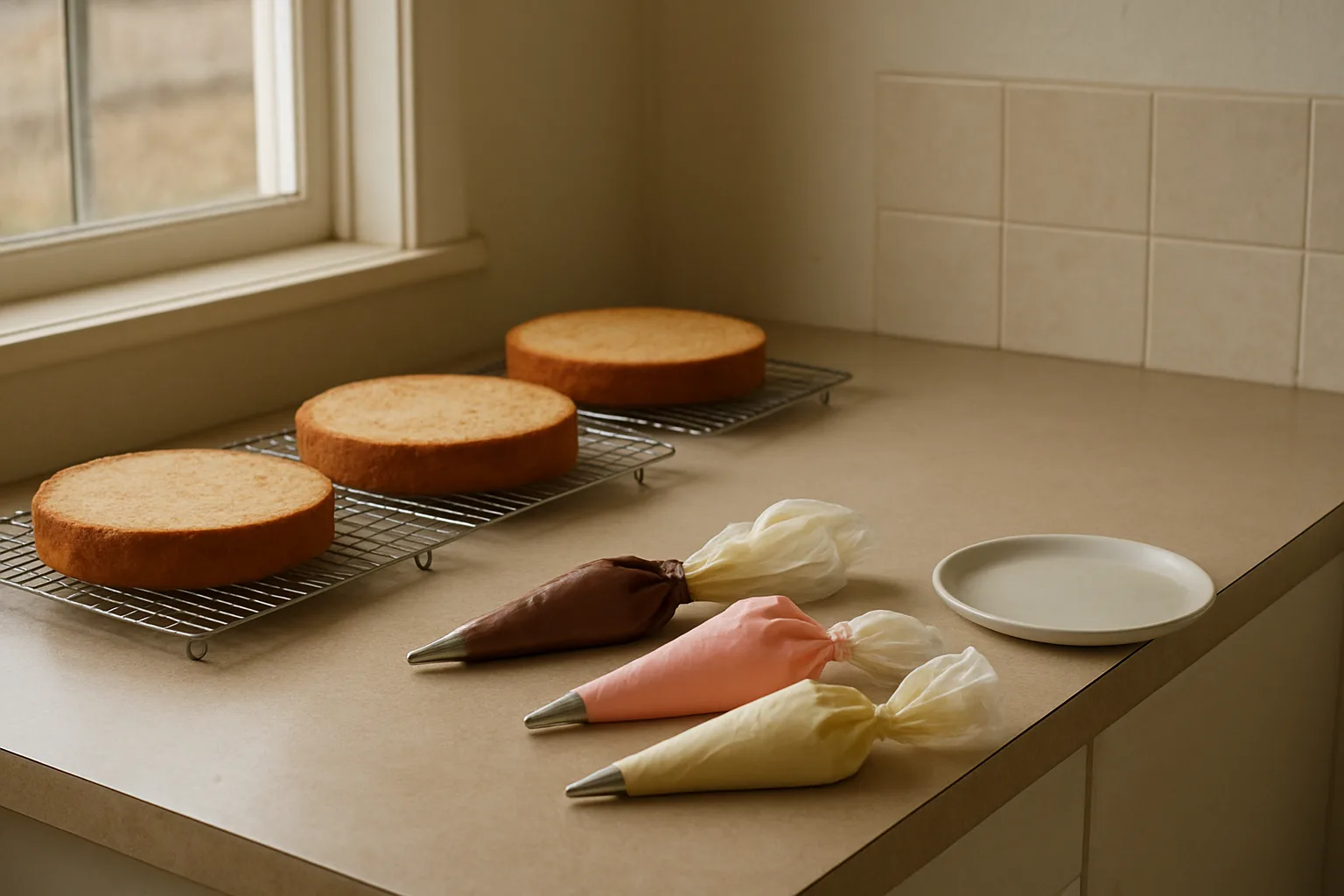
Hypothetical capacity check: if you have 12 decorating hours available and each cake needs three hours, four cakes use the whole allowance. That leaves no buffer for a repair, a slower design or a packing problem. Consider offering fewer places or simplifying the designs.
- Check decorating and assembly time, not just oven capacity.
- Allow space for finished orders as well as ingredients.
- Include boxing, cleaning and customer handover in the schedule.
- Keep a separate custom-order limit alongside your standard Christmas menu.
Vendl’s Collections make list shows product and option totals, order count and money taken for the day’s paid pre-orders. Use those totals alongside your agreed design records and labour plan. A product count alone cannot tell you how demanding each custom decoration will be.
Plan pickup, late arrivals and safe holding together
Offer a collection window you can actually staff. For example: “Collection is 9–11 am. If you are running late, contact us before 11 am so we can discuss whether another handover is possible.” Avoid promising to remain available all day.
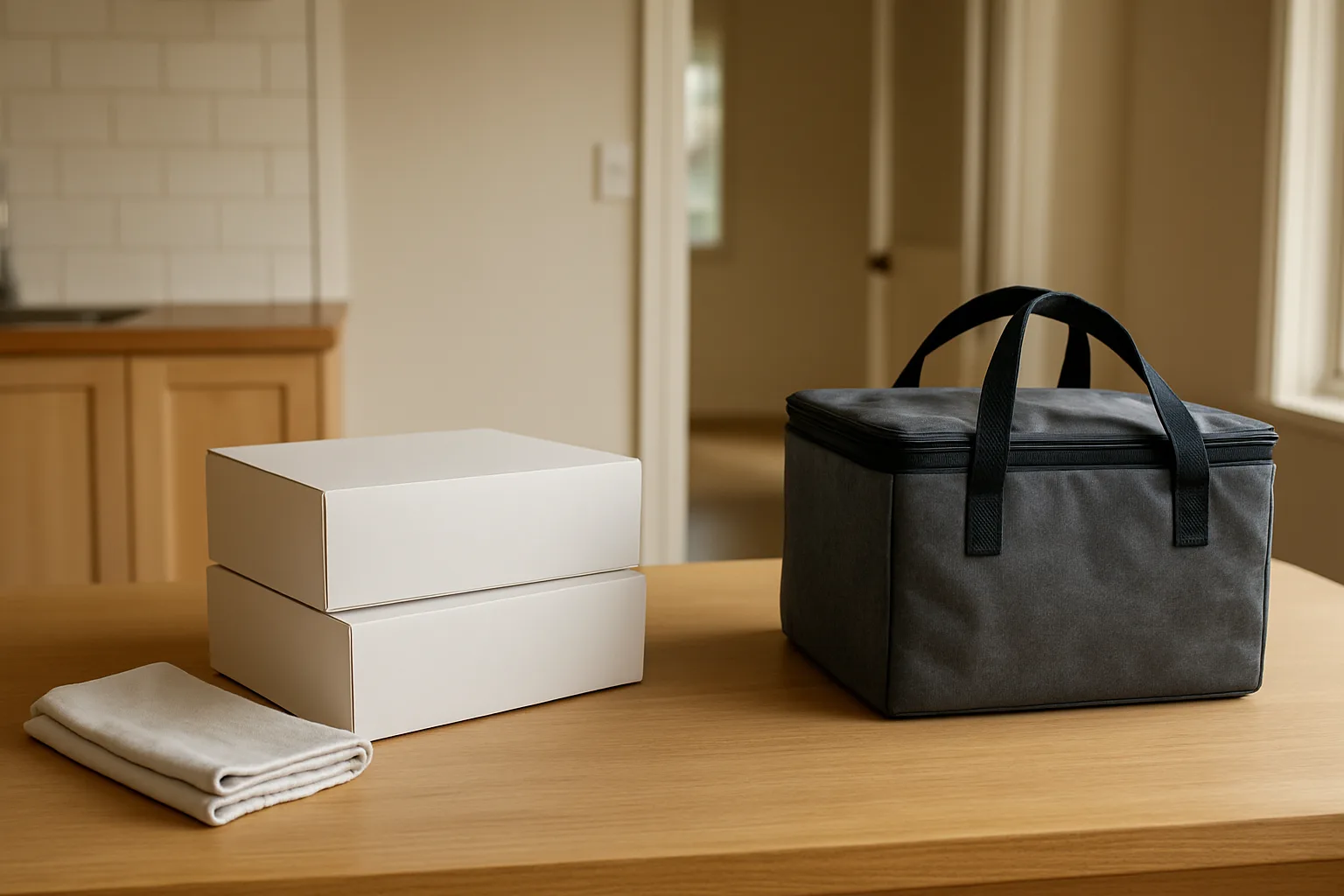
Set your latest possible handover around appropriate storage and your own availability. Do not invent a universal holding time for cakes or leave temperature-sensitive food outside because a buyer is late. Across Australia, FSANZ’s home-based food business guidance says home businesses must meet the same food safety requirements as other food businesses. Check suitable storage and transport arrangements with your local food regulator, usually your council.
If someone misses collection, contact them, record the attempt and discuss a safe alternative if one is available. Keep the food-handling decision separate from the payment dispute. Do not assume a missed window automatically permits forfeiting the order or keeping every payment.
In Vendl Collections, use the packing list to check each buyer’s items, mark packed orders Ready and mark them Collected when handed over. You can print the day list and order labels, so the pickup table does not depend on searching old messages.
Give customers a short booking summary they can understand
Lead with the practical agreement, not a wall of defensive terms. Here is a hypothetical operational summary for a deposit-on-handover arrangement; it is not a complete legal cancellation policy:
Your custom order total is AUD $400. A $160 deposit counts towards that total and confirms the agreed booking when received. The remaining $240 is due at handover. Please confirm final design details by 14 December. Collection is 24 December, 9–11 am. Contact us before the window ends if you are running late. Please read and accept the cancellation and refund terms supplied with your quote before paying.
Before sending it, check that the payment page, written quote and production plan all say the same thing. Clear agreement cannot guarantee attendance, but it gives both sides a usable record of what happens next.
Move your agreed bookings into paid, organised reservations with Vendl pre-order pages with optional deposits.
Frequently asked questions
- Should I accept a last-minute custom order after bookings close?
- Only if you can assess it without compromising existing orders. Check ingredients, preparation time, storage and handover capacity before agreeing. A smaller design or standard product may be more realistic than reopening your full custom menu.
- What if the customer asks for an expensive change after paying?
- Check whether the change is feasible, then send a revised scope and total for written agreement before doing extra work. Recalculate the amount already paid and the remaining amount clearly. Do not treat an informal request as approval of an additional charge.
- Can someone else collect the order for the customer?
- You can arrange this in advance. Ask the buyer to confirm who is collecting and make sure that person has the collection details and relevant storage or transport instructions. Keep a record of the handover.
- Should I offer delivery if a customer misses pickup?
- Do not promise delivery as an automatic fallback. Consider whether you have the time and a suitable way to transport the order. If you offer an alternative, agree the timing and any additional charge before setting out.
Get new guides by email
Practical guides for stall, market and home-food sellers. No spam, unsubscribe any time.
Keep reading
Organise Christmas bake orders by payment, production and pickup day
A manageable Christmas bake starts with a small menu and clear limits. Set up separate collection days, choose payment terms and turn confirmed orders into production and packing lists.

Run a weekly produce or bake box without chasing repeat orders
A recurring box needs more than a regular customer list. Plan the contents, charging cycle and pickup routine so each paid order moves straight into production and packing.
Vendl vs Shopify: choose a shop that fits your bake days and markets
If most of your orders end at a market table or local pickup, compare the weekly workflow before choosing your platform. Here’s where Vendl fits, when Shopify makes sense, and how to budget fairly.