Selling food from home in QLD: a product-by-product licence checklist
Published By Jono Farrington · 8 min read
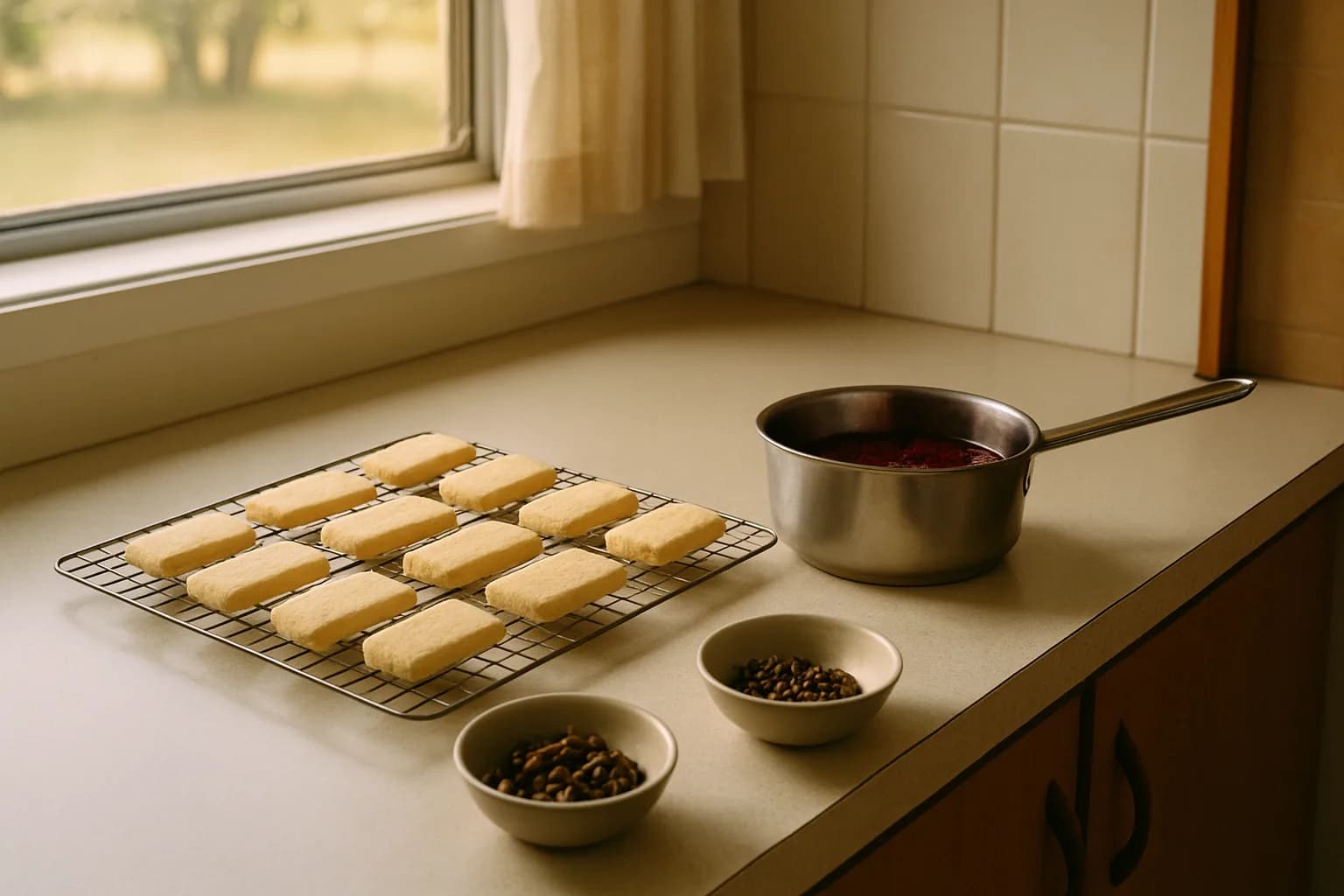
To sell food from home in Queensland, check what you do to the food, not just whether it is low risk. Manufacturing generally requires a council food business licence, while some retail-only activities are exempt. Baking for markets, blending ingredients and reselling unopened packets can therefore have different licence outcomes. (qld.gov.au)
This checklist helps you describe your proposed business accurately before spending money on equipment or accepting orders. Use it alongside our Queensland home-food reference for the broader regulatory overview.
Checked 19 October 2026. General guidance for Queensland, not an approval for your premises or product. Confirm your arrangements with the relevant council.
Start with the activity, not the product name
Queensland's Food Act 2006 defines manufacturing to include combining ingredients, significantly changing food, bottling or canning it, and packing unpackaged food other than unprocessed primary produce. Buying a bulk bag and making smaller retail packets is therefore not necessarily simple resale. (legislation.qld.gov.au)
There is an important qualification: preparing food at a place for retail sale at that same place is excluded from the manufacturing definition. That does not automatically make the business licence-free, because unpackaged retail sales can require a licence. Ask council how this applies to your exact home-sales arrangement, including online orders collected there. (legislation.qld.gov.au)
Queensland lists exemptions for sales of certain foods, including non-hazardous unpackaged snacks and spices. Those sale exemptions are not a blanket exemption for making every product in those categories. Food-safety obligations still apply even where no food business licence is required. (qld.gov.au)
Work through biscuits, jam, spices and packaged resale
The following are hypothetical Queensland businesses. Use the matching example as a starting point, then give council your actual recipe, process and sales locations.
| Proposed activity | Starting licence assessment | What to explain to council |
|---|---|---|
| Bake biscuits at home, then sell packets at a market | Manufacturing at home, not simply exempt snack retail. | Mixing, baking, cooling, packing and the separate market location. |
| Cook and bottle jam at home for market sales | Manufacturing, even if the finished jars are shelf-stable. | Recipe, preservation process, storage and proposed shelf life. |
| Blend spices at home and pack them for markets | Assess as manufacturing, not just selling spices. | Every mixing, grinding and packing step. |
| Buy finished, sealed food and resell it unchanged | Packaged-food retail is generally licence-exempt. | Supplier, storage and confirmation that packs stay unopened. |
These distinctions follow Queensland's manufacturing and retail guidance. Cairns Regional Council's temporary-food guide specifically identifies biscuit production, jam-making and repacking bulk spices as manufacturing activities. (qld.gov.au)
Biscuits: separate baking from selling
Example: you plan to bake plain shortbread on Thursday, pack it on Friday and sell it at Saturday's market. Ask council to assess the home preparation premises separately from the stall. Describe any fillings or toppings rather than relying on the word “biscuit”. Cairns' guidance distinguishes manufacturing from selling non-hazardous snacks made under a food licence. (cairns.qld.gov.au)
Jam: a sealed jar is not proof of shelf stability
Example: you want to sell a reduced-sugar strawberry jam. Put the exact recipe and process in your enquiry and ask what evidence is needed for safe storage and shelf life. FSANZ advises home manufacturers to understand safety limits such as acidity and water activity. Do not assign a shelf life simply because a jar sealed successfully. (foodstandards.gov.au)
Spices: explain whether you mix or only resell
Example: buying sealed curry powder for resale differs from combining cumin, coriander and turmeric yourself. The latter combines ingredients, so ask council about manufacturing rather than relying on Queensland's spice-sale exemption. Include repacking in the description even if you do not blend anything. (qld.gov.au)
Packaged resale: keep the activity genuinely unchanged
Example: you buy finished jars from another producer and sell them unopened. Queensland identifies packaged-food sales as licence-exempt. Keep your supplier information and storage instructions together, and seek a fresh assessment before adding open samples or repacking. (qld.gov.au)
Complete a product-assessment worksheet
Copy this table into a document and complete one version for each product. Treat it as an enquiry worksheet, not a self-issued approval.
| Record | Details to include |
|---|---|
| Product and ingredients | Exact recipe, fillings, toppings and ingredients within bought-in mixes. |
| Your process | What you buy, mix, cook, cool, grind, bottle or repack. |
| Every location | Where ingredients arrive, food is prepared, stock is stored and customers receive it. |
| Storage and shelf life | Proposed temperatures, packaging, shelf life and supporting evidence. |
| Sales method | Home pickup, walk-up sales, market stall, delivery or supply to another business. |
| Scale | Largest batch, maximum stock held and expected customer visits. |
| Information for buyers | Draft label, allergen information and storage instructions. |
| Council response | Required licences, other approvals, conditions and unresolved questions. |
For the shortbread example, write “mix dough, bake, cool, pack at home; transport sealed packets to a market” rather than “sell low-risk food”. The first description gives council something concrete to assess.
Check home pickup and market sales separately
For Queensland sellers, home pickup and a market stall should not be treated as one undifferentiated activity. Cairns' guidance says a temporary premises handling only packaged food manufactured under a food licence does not need a food business licence for that activity. That does not remove the manufacturing-premises requirement. (cairns.qld.gov.au)
Use this sales-channel checklist when contacting council:
- Pre-arranged home pickup: describe order placement, payment, handover location, collection hours and expected vehicle visits.
- Walk-up home sales: describe opening hours, browsing, signs, parking and whether customers enter the premises.
- Markets or festivals: identify each event location and whether you only hand over sealed goods or also open, portion, sample or prepare food.
Ask the council where the kitchen is located about the home operation. Ask the council where the event takes place about the stall. Separately, ask the organiser what insurance, site permission and stall paperwork they require.
Brisbane example: Brisbane City Council distinguishes fixed premises from temporary stalls. Its home-food guidance limits home-based preparation to low-risk foods and specifies separation from household preparation, commercial-grade surfaces and appliances, and exclusion of children and pets. Do not assume your existing domestic kitchen will qualify. (brisbane.qld.gov.au)
Planning is another check. In Brisbane, a home business meeting all accepted-development criteria does not need a development application; one that does not meet them requires an application. Ask your own council about its planning scheme rather than applying Brisbane's process across Queensland. (brisbane.qld.gov.au)
Prepare a storage and food-safety plan
Queensland Health advises storing business food and food-handling items separately from household supplies, protected from contamination. It discourages commercial food storage in garages or sheds unless they are appropriately sealed and vermin-proof. (qld.gov.au)
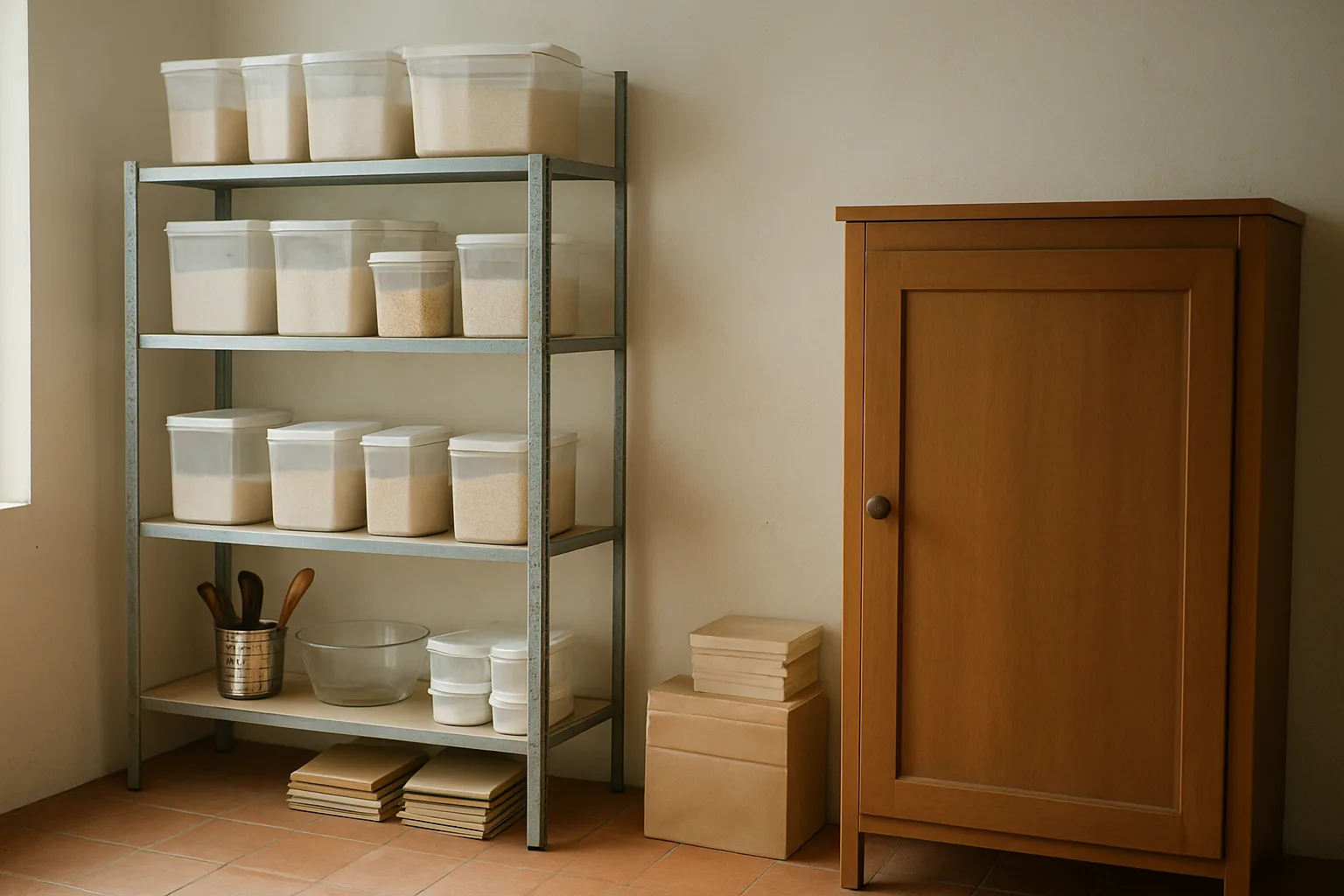
Before buying shelving or another fridge, sketch where you propose to keep:
- Ingredients and unopened supplier stock.
- Cooling food and finished products.
- Clean containers and food-contact equipment.
- Packaging, household food, chemicals and waste.
Include your largest planned batch. Ask council whether the layout, handwashing facilities, cleaning arrangements and storage capacity are suitable. Queensland Health also directs home businesses to check zoning, planning, trade waste and environmental requirements. Licensable Queensland food businesses must nominate a food safety supervisor. (qld.gov.au)
For potentially hazardous products sold in Queensland, such as fresh custard or cream-based foods, temperature control extends through storage, transport and display. Generally, keep them at 5°C or colder, or 60°C or hotter, unless you can demonstrate another safe arrangement. Check the food temperature with a suitable thermometer. (foodstandards.gov.au)
A proposed chilled product deserves its own assessment. Do not add it to a dry-biscuit business without checking premises suitability and handling requirements first.
Check labels before ordering packaging
For Queensland sales, assess labelling separately from licensing. Packaged retail food generally needs a label, but exceptions include food made and packaged on the premises from which it is sold. Some information remains necessary even where a full label is not required. A home-pickup arrangement and a market sale may therefore have different labelling outcomes. (health.qld.gov.au)
Use Queensland Health's food-labelling guidance and Label Buster to check your particular product. (qld.gov.au)
Before printing, check which requirements apply for the food name, supplier name and business address, lot identification, ingredients, date marking, storage directions, nutrition information and characterising ingredients. Also check applicable country-of-origin and net-quantity requirements. This is a review list, not a universal label template. (health.qld.gov.au)
For Queensland products requiring an ingredients statement, current allergen rules generally require prescribed allergen names in bold within that statement and a separate bold “Contains” summary beside it. Foods exempt from bearing a label still need required allergen declarations displayed with the food or available on request. (foodstandards.gov.au)
Send council a specific enquiry
Find the relevant contact through our Queensland council directory. Attach your completed worksheets, a kitchen sketch and draft labels. You can adapt these questions:
- Does each proposed activity require a food business licence? Please distinguish preparation, manufacturing, repacking and retail sale.
- If food is prepared and sold at my home, how does the same-premises provision apply to my arrangement?
- Can this menu be prepared at my address, and what fit-out changes or inspections would you require?
- Are my ingredient, finished-stock and household-storage arrangements suitable?
- Do home pickups or walk-up customers trigger planning, parking, signage or operating-hours requirements?
- Are trade waste, water supply, wastewater or other environmental approvals relevant?
- What changes if I sell at a market, offer samples or supply another shop?
- What food safety supervisor, training, labelling and shelf-life evidence do you need?
- Which application, inspection and renewal fees apply, and when could I lawfully begin?
Request a written response that identifies the products and processes assessed. Keep unresolved items on your worksheet rather than treating a general phone conversation as approval.
Once approved, organise pre-orders around your production plan
After resolving your council requirements, use Vendl pre-order pages to set an orders-close time and a collection time, add collection instructions and take card payment through connected Stripe or Square. Collections provides product totals for making orders and a customer packing list with Ready and Collected statuses.
Hypothetical example: an approved biscuit seller closes orders on Wednesday for Saturday collection. Use the paid-order make list to plan production, pack by customer and mark each order Collected at handover. Choose collection arrangements that match what you discussed with council.
Keep your food-safety and labelling checks separate from order administration. Vendl's printable order labels are for organising orders, not a substitute for checking legally required food-label information.
When your products and premises are ready, create a Vendl account to set up your first paid pre-order collection.
Frequently asked questions
- Does selling only occasionally make my Queensland food business exempt?
- Not by itself. Queensland's Food Act definition can cover handling or selling food on a single occasion. Assess the activity and any specific exemption rather than relying on how rarely you sell.
- Do I need to keep ingredient and supplier records?
- Yes. FSANZ advises home food businesses, including those in Queensland, to retain ingredient and supplier records and records of businesses supplied. Manufacturers, wholesale suppliers and importers also need a written food-recall plan.
- Can I use old packaging with the previous allergen format?
- Do not assume it is still compliant. The sell-through allowance for qualifying food packaged and labelled before 25 February 2024 ended on 25 February 2026. For Queensland sales in October 2026, check labels against the current plain-English allergen requirements.
- What if I later change my recipe or start selling chilled food?
- Tell your local food regulator before changing your food activities. For a Queensland home business, ask council whether the change affects your licence, premises suitability, handling controls or labels. FSANZ specifically advises notifying council before changes to food activities.
Get new guides by email
Practical guides for stall, market and home-food sellers. No spam, unsubscribe any time.
Keep reading
Organise Christmas bake orders by payment, production and pickup day
A manageable Christmas bake starts with a small menu and clear limits. Set up separate collection days, choose payment terms and turn confirmed orders into production and packing lists.
Vendl vs Bakesy: Which Is Better for Unattended Payments, Pre-Orders and Inventory?
A workflow-based comparison for stand holders, roadside sellers and home bakers choosing between unattended QR checkout and bakery order software.
Sell food from home in Australia
State-by-state rules for home food businesses: registration, labelling and where you can sell.